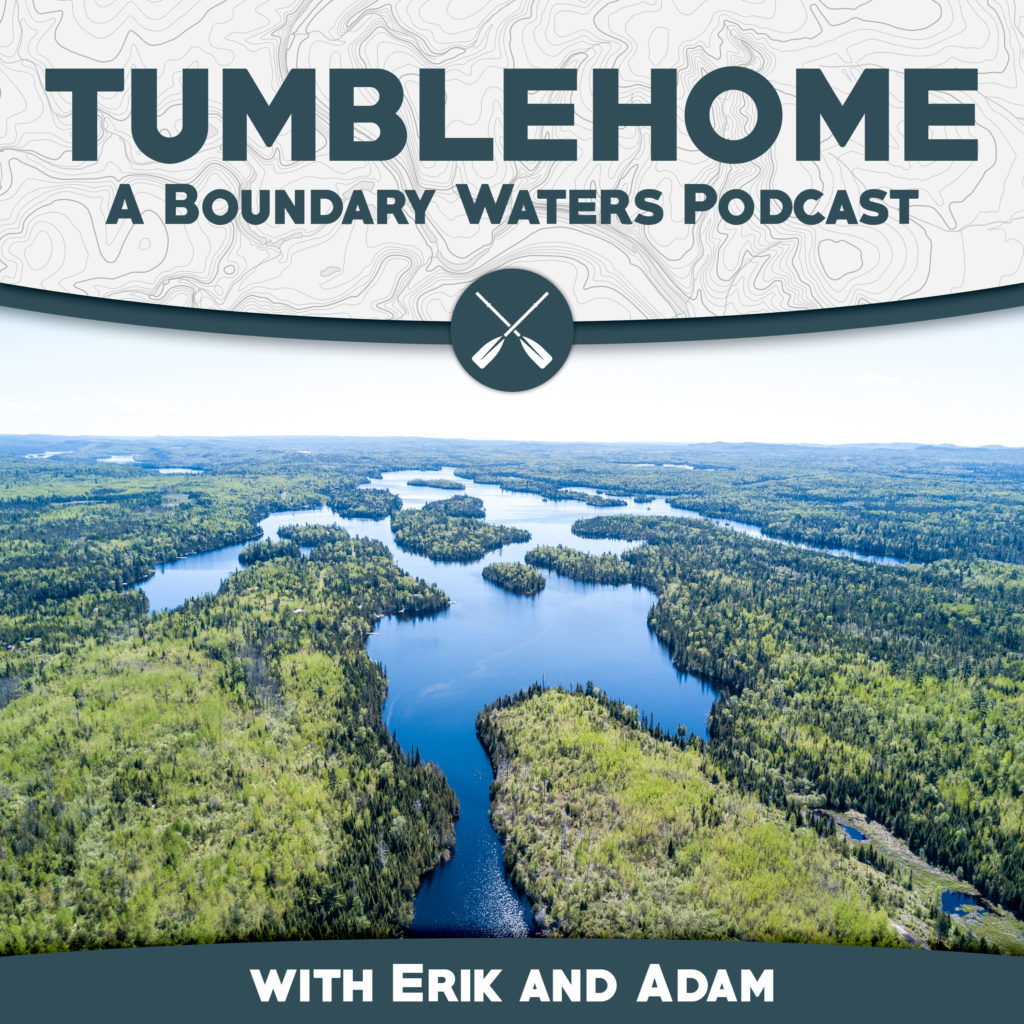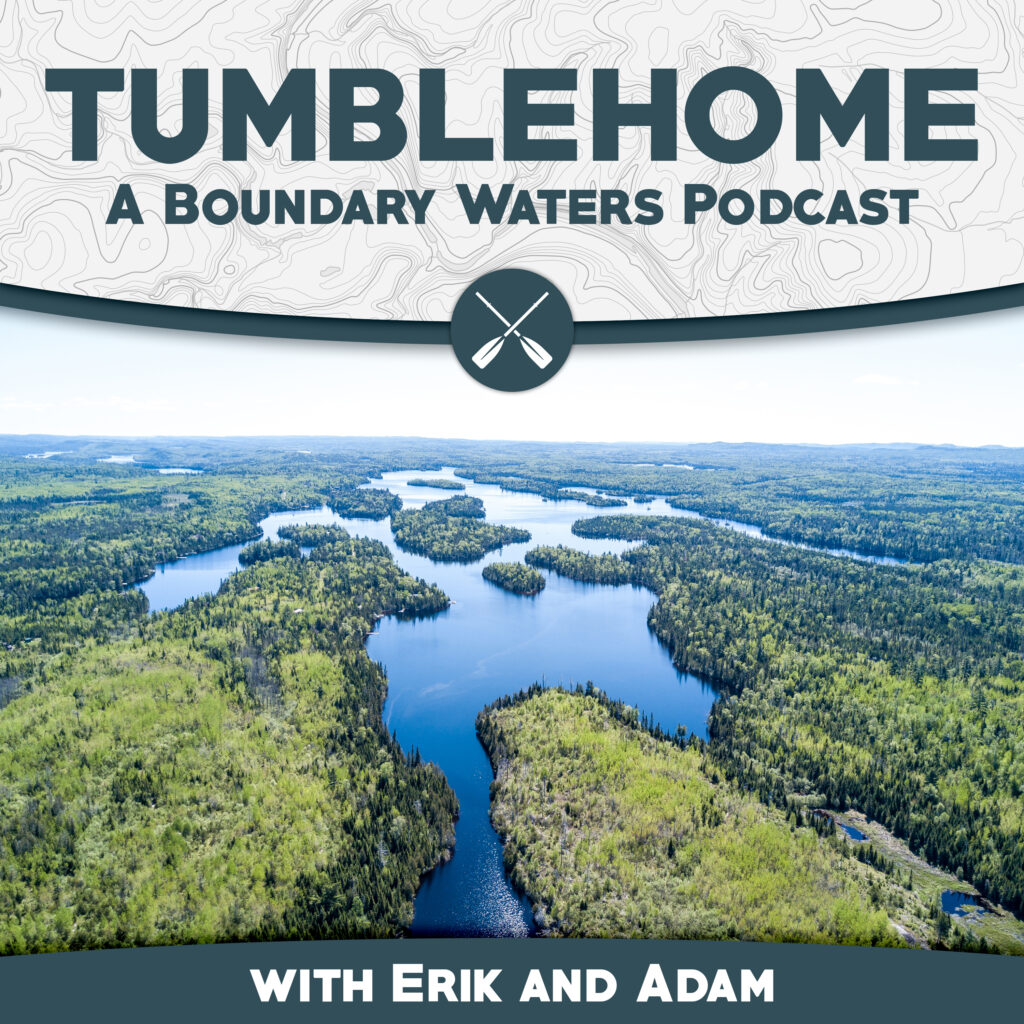

Erik and Adam explore everything that this hub lake halfway up the Gunflint Trail has to offer. Poplar Lake offers access to multiple entry points in the Boundary Waters Canoe Area while also being home to multiple lodges, outfitters and restaurants. Join us as we explore this amazing lake. You can find us on Soundcloud […]
The post Tumblehome: A Boundary Waters Podcast – 012: Poplar Lake appeared first on Clearwater Outfitters.
Episode Transcript
[0:00:01 – 0:00:02] Adam: All right, where are we at?
[0:00:02 – 0:00:03] Adam: Poplar Lake.
[0:00:04 – 0:00:05] Adam: It’s one of my favorites.
[0:00:05 – 0:00:09] Adam: I used to live here for five years, and it’s a lake near and dear to my heart.
[0:00:10 – 0:00:12] Adam: We are the only ones on Poplar Lake today.
[0:00:13 – 0:00:15] Adam: It is the middle of April 2018.
[0:00:16 – 0:00:16] Adam: I’m Adam.
[0:00:16 – 0:00:20] Adam: I’m here with Eric for Tumble Home Podcast, and we’re in the field, live in the field.
[0:00:21 – 0:00:47] Adam: trying to get some crappies uh none so far but uh we’re in this fine bay on the on poplar and it’s a little bit shallower in general than the rest of the lake and then this time of the year the crappie and the whitefish in particular seem to move into these shallows beneath the ice they’re waiting for the ice to melt and then they can do their thing so
[0:00:48 – 0:00:56] Erik: What would you say the depth that we’re fishing in here and how much ice did we have to drill through on April 13th?
[0:00:57 – 0:00:58] Erik: Friday the 13th.
[0:00:59 – 0:01:01] Erik: How spooky was the ice?
[0:01:01 – 0:01:02] Erik: That’s what I want to know.
[0:01:02 – 0:01:03] Adam: Not spooky at all.
[0:01:03 – 0:01:06] Adam: Like, I seriously was thinking about just driving out.
[0:01:06 – 0:01:12] Adam: The landing is a little slushy, but we had easily two feet of ice, possibly 30 inches.
[0:01:13 – 0:01:14] Adam: Solid ice.
[0:01:14 – 0:01:18] Adam: There’s a little bit of snow on top, but that’s even kind of melted down here.
[0:01:18 – 0:01:21] Adam: So we’re in about 10 feet here.
[0:01:23 – 0:01:28] Adam: And I’m jigging a wax worm about five feet down.
[0:01:29 – 0:01:34] Adam: In my experience, when the crappies and the whitefish are in here, they’re kind of cruising and moving.
[0:01:34 – 0:01:37] Erik: Listen to that wilderness in the background.
[0:01:37 – 0:01:38] Adam: I think that’s the jack sparrow.
[0:01:39 – 0:01:39] Erik: I think it is, too.
[0:01:39 – 0:01:40] Erik: That’s its mating call.
[0:01:40 – 0:01:42] Erik: It’s really long and annoying.
[0:01:43 – 0:02:05] Adam: but uh yeah the fish they kind of cruise they’re cruising these flats these shallow flats below the ice this time of year got a lot of daylight here they’re really moving but like generally the late afternoon they really get moving and try and put on the feed bag before dinner uh before bedtime so so you would say that there is a witching hour for the crappies
[0:02:05 – 0:02:07] Adam: It seems to me like 3 to 6.
[0:02:07 – 0:02:12] Adam: You know, I’ve been on a lot of lakes down in Wisconsin where I grew up where you’d only get them at night.
[0:02:13 – 0:02:18] Adam: You know, or like 7 to 7.30, right at the twilight time.
[0:02:19 – 0:02:22] Adam: But on this lake, it’s never had any success.
[0:02:22 – 0:02:28] Adam: I’ve sat out late many a night, both for trying for the crappie and for the beloved eel pout.
[0:02:29 – 0:02:53] Adam: and i’ve never had any luck after dark on this lake but yeah that three to six hour either for jigging them like this in march and april or just trolling a little rapala around in the shallows in june and july they they seem to go three to six it’s a real hot time for them so yeah and the uh the eel pout that is the uh the state fish for minnesota is that correct
[0:02:54 – 0:02:57] Adam: That’s a rock fact, and I’ve yet to catch one.
[0:02:58 – 0:02:58] Adam: I will admit it.
[0:02:59 – 0:03:03] Adam: It is my duty in the next couple years to really try and get on the pout.
[0:03:04 – 0:03:09] Adam: But until that day comes, I’m going to be just trying to get a crappie.
[0:03:10 – 0:03:12] Adam: If I can just get one crappie, I’d be thrilled.
[0:03:13 – 0:03:15] Adam: If I can get three crappies, that’s a fish fry.
[0:03:16 – 0:03:21] Adam: One big crappie, though, that’s a nice breakfast for me and Natalie.
[0:03:22 – 0:03:23] Adam: That’s a really solid breakfast.
[0:03:24 – 0:03:28] Adam: And it would help me to go out on ice fishing season where I can just put the gear away.
[0:03:29 – 0:03:30] Adam: I’ve been fishing a lot.
[0:03:30 – 0:03:32] Adam: I’ve been drilling a lot of holes.
[0:03:32 – 0:03:34] Adam: But I got skunked on the last day of trout season.
[0:03:35 – 0:03:38] Adam: So I would really like to put one fish on the ice here.
[0:03:38 – 0:03:39] Adam: And then I can just…
[0:03:39 – 0:03:42] Adam: If I caught a fish, I would literally just reel up and I’d be done for the day.
[0:03:42 – 0:03:43] Erik: And on a high note?
[0:03:44 – 0:03:44] Erik: Absolutely.
[0:03:44 – 0:03:45] Erik: Go out on top.
[0:03:45 – 0:03:46] Erik: It’s kind of like the…
[0:03:48 – 0:03:51] Erik: How many months out of the year have you been swimming up here?
[0:03:51 – 0:03:54] Erik: It’s kind of like, how many months out of the year have you caught a fish through the ice?
[0:03:54 – 0:03:57] Erik: Or just in general, like, is there any month that you have not caught a fish?
[0:03:59 – 0:03:59] Adam: No.
[0:03:59 – 0:04:00] UNKNOWN: No.
[0:04:00 – 0:04:01] Adam: No, I’ve got that all covered.
[0:04:02 – 0:04:04] Adam: The swimming, I need to catch up on a few.
[0:04:04 – 0:04:08] Adam: No April swimming, no November swimming that I know of.
[0:04:09 – 0:04:10] Adam: That I know of.
[0:04:12 – 0:04:15] Erik: Maybe your mom dunked you as a one-year-old or something up here that you don’t remember.
[0:04:15 – 0:04:17] Adam: Probably explains a lot.
[0:04:17 – 0:04:18] Adam: Yep.
[0:04:19 – 0:04:21] Adam: But anyhow, it’s a beautiful day here.
[0:04:22 – 0:04:23] Adam: We got the whole lake to ourselves.
[0:04:23 – 0:04:27] Adam: I’d say 98% of these cabins on this lake are empty.
[0:04:28 – 0:04:32] Adam: There are maybe five vehicles total on the Gunflint trail.
[0:04:33 – 0:04:35] Adam: And you know, we’re just out here living the dream.
[0:04:37 – 0:04:40] Adam: It’s one of the few things that you can do in April, uh, especially fishing wise.
[0:04:41 – 0:04:46] Adam: If you really got the itch to get out and fish one more time, go over some crappies.
[0:04:46 – 0:04:49] Adam: They’re open year-round, and steelhead’s not open yet.
[0:04:49 – 0:04:52] Adam: So, yeah, it’s a lot of fun out here.
[0:04:52 – 0:04:57] Adam: It’s just a nice day to be out, getting a lot of sun, working on that tan, living the dream, baby.
[0:04:57 – 0:04:58] Erik: April tans.
[0:04:58 – 0:05:00] Erik: Hashtag, you’ll pop.
[0:05:25 – 0:05:26] Erik: There you have it.
[0:05:27 – 0:05:31] Erik: Welcome back to Tumble Home, a Boundary Waters podcast.
[0:05:32 – 0:05:36] Erik: This is Eric and I am joined again by… Adam here.
[0:05:37 – 0:05:37] Erik: Good to be back.
[0:05:38 – 0:05:45] Erik: Yeah, we are brought to you by, as always, by Clearwater Historic Lodge and Canoe Outfitters.
[0:05:46 – 0:05:50] Adam: And also Splendid Moose in Northeast style.
[0:05:51 – 0:05:53] Adam: Pale ale, whatever that means.
[0:05:54 – 0:05:55] Adam: Tastes like Boston.
[0:05:56 – 0:05:58] Adam: Don’t feed the splendid moose.
[0:05:58 – 0:05:59] Adam: Is that?
[0:05:59 – 0:06:01] Adam: It’s by, this is Insight Brewing.
[0:06:01 – 0:06:02] Erik: Oh, nice.
[0:06:02 – 0:06:02] Erik: Here we go.
[0:06:02 – 0:06:05] Adam: So we’re really happy to have them as a sponsor for this episode.
[0:06:05 – 0:06:08] Adam: Hopefully we can get in a long-term deal signed soon.
[0:06:08 – 0:06:10] Adam: Call us up Insight.
[0:06:10 – 0:06:11] Erik: Call us up.
[0:06:12 – 0:06:15] Erik: So, yeah, it’s been, boy, it’s been a couple of weeks.
[0:06:16 – 0:06:22] Erik: Had a little short episode last week where it was just me rambling about the campsite in Little Caribou.
[0:06:23 – 0:06:24] Erik: But, yeah.
[0:06:24 – 0:06:25] Adam: Sorry I couldn’t be there for that one.
[0:06:25 – 0:06:29] Erik: Sorry you couldn’t be out in the Pacific Northwest with me.
[0:06:29 – 0:06:29] Erik: Yeah, I mean.
[0:06:30 – 0:06:32] Adam: I’m guessing you didn’t include the information on the Ebola bar.
[0:06:33 – 0:07:01] Adam: i did not actually i totally dropped the ball on uh talking about your uh very topical ebola bar yeah i’ll keep it quick 30 second story and then we can move on from little caribou yeah it was the fall of i don’t know 2016 really like an october trip we were in there with some buddies and it was during this big ebola scare so we had wedged a nice piece of flat uh split wood in between two trees in camp and it was a nice little bar set up there for our
[0:07:01 – 0:07:27] Adam: drinks and making morning coffee and cocktails in the evening and so we had made a little sign and branded it the Ebola bar but it got taken down pretty quick the next time I stopped there it was gone for sure so somebody knocked it out of there they did not appreciate the little table we had left too edgy no well we did leave a trace so well that too questionable but it was an October trip and it was snowing a lot so yeah that’s my little caribou story
[0:07:27 – 0:07:27] Adam: All right.
[0:07:28 – 0:07:30] Erik: Also one time I camped there.
[0:07:30 – 0:07:33] Adam: One time I did camp there with brother and we saw the space station.
[0:07:34 – 0:07:35] Adam: Oh, really just remarkable.
[0:07:36 – 0:07:36] Erik: Yeah.
[0:07:36 – 0:07:39] Adam: Went right over the top and it was in June.
[0:07:39 – 0:07:42] Adam: So it was like one in the morning before it really got dark too.
[0:07:42 – 0:07:43] Adam: So yeah, that’s late night.
[0:07:44 – 0:08:01] Erik: that’s uh one of the tough parts of june which that is one of the topics of the show is uh our favorite times of year to be in the bunch waters and yours each season has its own advantage and disadvantage yeah like everything pros and cons make your list we will definitely get to that um
[0:08:02 – 0:08:11] Erik: But yeah, I was out on the Orcas Islands in Washington for the first week of April on a little vacation enjoying spring.
[0:08:12 – 0:08:23] Erik: They don’t really have hardcore winters out there, but it was a nice little break because not to get too topical, but it’s still winter out there.
[0:08:23 – 0:08:24] Adam: Very much winter out here.
[0:08:24 – 0:08:26] Adam: Yeah, there’s at least two feet.
[0:08:26 – 0:08:27] Adam: I had heard…
[0:08:28 – 0:08:33] Adam: From one of my foul lake contacts that there’s over four feet of ice on the fouls right now.
[0:08:33 – 0:08:34] Adam: Jeez.
[0:08:34 – 0:08:38] Adam: Which I’m not surprised by, but I don’t even know how you go about drilling a hole through that.
[0:08:39 – 0:08:39] Erik: You don’t.
[0:08:39 – 0:08:40] Adam: Yeah.
[0:08:40 – 0:08:42] Adam: I just, how did you find out it’s four feet?
[0:08:42 – 0:08:42] Erik: Right.
[0:08:43 – 0:08:43] Erik: That’s crazy.
[0:08:43 – 0:08:44] Erik: Yeah.
[0:08:44 – 0:08:47] Erik: The auger just stopped drilling because you couldn’t anymore.
[0:08:47 – 0:08:50] Erik: So you would just have to assume it’s at least four feet.
[0:08:50 – 0:08:51] Adam: More than that.
[0:08:51 – 0:08:51] Adam: Yeah.
[0:08:51 – 0:08:51] Adam: Yeah.
[0:08:51 – 0:08:58] Erik: I was surprised to get out on Clearwater last week to find only about 25 inches, but that’s one spot.
[0:08:58 – 0:08:59] Adam: That seems more reasonable, yeah.
[0:09:00 – 0:09:05] Erik: But, you know, it’s probably because the fowls are really shallow and they freeze early and they probably freeze harder.
[0:09:05 – 0:09:09] Erik: But there’s a lot of moving water through there too, so they’ll probably break up still pretty early.
[0:09:09 – 0:09:30] Erik: right do we uh the real downside is uh there’s still a good amount of white reflective snow on top of the ice and the ice that does uh exist still is like hardcore winter black clear ice it’s not even starting to degrade at all at this point i am mildly worried about our frost river trip in the end of may
[0:09:31 – 0:09:33] Erik: Yeah, I love that we just jumped past opener.
[0:09:33 – 0:09:34] Erik: That’s not happening.
[0:09:34 – 0:09:34] Erik: Sorry.
[0:09:34 – 0:09:35] Adam: Opener’s off the table.
[0:09:36 – 0:09:41] Adam: If you have any May 20th permits, you may want to start to be a little worried, as I am.
[0:09:42 – 0:09:52] Adam: I think the smaller lakes and the moving water will be fine, but we have to go through Tuscarora at some point, probably at the end if we’re doing it with the current, which is what we’re going to do.
[0:09:52 – 0:09:55] Adam: And I’m a little worried we’re going to get there and Tuscarora is going to still be locked in.
[0:09:56 – 0:10:01] Erik: Yeah, I mean, I still would be pretty hopeful for that.
[0:10:01 – 0:10:02] Erik: I think it’s going to be fine.
[0:10:02 – 0:10:02] Erik: Yeah.
[0:10:02 – 0:10:03] Adam: It’s been beautiful.
[0:10:03 – 0:10:06] Adam: We hit 40s and it’s going to be…
[0:10:06 – 0:10:07] Adam: It’s melting, starting to melt.
[0:10:08 – 0:10:14] Adam: Yeah, you know, every morning we take a walk in the woods and there’s a little bit less snow and it’s on its way, but…
[0:10:14 – 0:10:19] Erik: I mean, it’s tough to look at conditions from the same time of year last year.
[0:10:19 – 0:10:21] Erik: And it was like gray.
[0:10:22 – 0:10:25] Erik: It was starting to break up by the end of April.
[0:10:25 – 0:10:34] Adam: I saw on the social media that one year ago, a few days ago, we were pulling the canoes out of the lodge at Clearwater and having a cookout.
[0:10:35 – 0:10:37] Erik: Yeah, we do a seasonal every fall.
[0:10:37 – 0:10:41] Erik: We move the canoes up from the canoe yard onto the porch and then back down in the spring.
[0:10:42 – 0:10:55] Erik: And if we were to try that today, we would be wading through like knee to thigh deep snow down at the waterfront and not being able to take advantage of a lot of the spaces where we store canoes on or close to the ground.
[0:10:55 – 0:10:55] Erik: Yeah.
[0:10:56 – 0:11:19] Erik: uh every year is different i’ve you know we’ve experienced series like this in the past and it is what it is there’s not much you can do about it but it’s uh it’s a slow march it’s not like uh last year where it it just went and it went out hard um every time you look at the forecast it’s like yeah 40s for high but then like 10 that night you’re like well that takes you until about midday for things to start softening up again um
[0:11:20 – 0:11:25] Erik: We need some 50s and 60s, and best thing is wind and rain to really get anything.
[0:11:25 – 0:11:27] Adam: Yeah, we need a good hard rain.
[0:11:28 – 0:11:33] Erik: So, yeah, I guess that’s not the greatest news from the Northwoods here.
[0:11:34 – 0:11:35] Erik: But, yeah, it is what it is.
[0:11:36 – 0:11:40] Erik: Did you see any whales out in the Northwest?
[0:11:40 – 0:11:41] Erik: I did.
[0:11:41 – 0:11:42] Erik: Yeah, actually.
[0:11:42 – 0:11:48] Erik: So we were out there because my wife’s sister works out there at a camp.
[0:11:48 – 0:11:53] Erik: And she was able to get us hooked up with a little whale tour thing.
[0:11:54 – 0:11:59] Erik: And, yeah, they’re pretty on the pulse of what’s happening with the whales out there.
[0:11:59 – 0:12:05] Erik: There’s a bunch of, you know, forums and communities that kind of let people know where the whales are at.
[0:12:05 – 0:12:06] Erik: Where’s the pod at?
[0:12:06 – 0:12:12] Erik: Yeah, and we were able to go out and see four transient orcas moving around.
[0:12:13 – 0:12:20] Erik: for about two hours we kind of hung out, you know, in the places that you’re supposed to, uh, hang out with them, not like right up on them.
[0:12:21 – 0:12:30] Erik: So they were never like jumping over the boat or anything, but we saw some pretty, uh, uh, some pretty cool action where they were kind of fishing and hunting and then just hanging out for a little bit.
[0:12:30 – 0:12:33] Erik: So yeah, it was one of those things where you’re not a hundred percent sure if you’re
[0:12:36 – 0:12:41] Erik: Yeah, so we got to see some whales and then they brought us over to this other island that’s privately owned.
[0:12:41 – 0:12:52] Erik: And it used to be a camp that you could go to, like a big lodge slash resort with a bunch of, like, what’s the word for…
[0:12:53 – 0:13:08] Erik: like wild game from other countries exotic exotic exotic games and you could come and hunt them and the camp is and resort is since closed down but the animals are still there so there’s these like asian yeah asian deer and like european sheep
[0:13:08 – 0:13:14] Erik: that we were able to just go right up next to the island and you could see them just hanging out like these crazy Asian deer.
[0:13:14 – 0:13:14] Erik: Yeah.
[0:13:15 – 0:13:19] Erik: And also a bunch of sea lions and harbor seals.
[0:13:19 – 0:13:21] Adam: It’s also where they filmed the most dangerous game.
[0:13:21 – 0:13:22] Erik: I was thinking that exact thing.
[0:13:22 – 0:13:27] Erik: This looks like you could film that short story into a movie here.
[0:13:27 – 0:13:29] Adam: Busey actually owns that island now.
[0:13:31 – 0:13:33] Adam: I didn’t think we were going to get to that in this episode.
[0:13:33 – 0:13:36] Adam: It’s strange where the episodes do lead you.
[0:13:36 – 0:13:38] Erik: It was a good time.
[0:13:38 – 0:13:44] Erik: It was hard to come back, but we’re here now watching the slow and steady march to spring.
[0:13:45 – 0:13:45] Adam: I love April.
[0:13:47 – 0:13:48] Erik: Each one’s different.
[0:13:48 – 0:13:50] Erik: It’s not my favorite month, but it does have its…
[0:13:50 – 0:13:52] Adam: It’s a super quiet month.
[0:13:52 – 0:14:02] Erik: That’s the silver lining, especially for us in the service industry who will inevitably be in the throes of taking care of people.
[0:14:03 – 0:14:05] Erik: And it gets busy up here.
[0:14:05 – 0:14:09] Erik: I’m sure anybody that’s been up here in July and August knows that.
[0:14:09 – 0:14:11] Erik: The quietest months are April and November.
[0:14:12 – 0:14:15] Erik: April, you can work with a little bit more depending on the year.
[0:14:15 – 0:14:18] Erik: November is the tough one just because it gets dark at four.
[0:14:19 – 0:14:20] Erik: There’s no ice on the lakes.
[0:14:20 – 0:14:21] Erik: Sometimes there’s not even snow.
[0:14:22 – 0:14:26] Erik: And it’s just one of those gray, drizzly, kind of dreary months.
[0:14:26 – 0:14:30] Erik: So that’s when everybody usually leaves and gets out of town and goes on vacation.
[0:14:30 – 0:14:31] Erik: And then April…
[0:14:32 – 0:14:54] Erik: is uh it’s quiet again because winter is still kind of on its way out usually but this year there’s still plenty that you could do on the on the ice i don’t know if you do too much in the way of skiing or snowmobiling at this point but uh there is you can fish for crappies yeah well the crappie season’s still open yeah i guess border waters are still open
[0:14:54 – 0:15:22] Adam: into april a little bit here but that’s about done i would think too i haven’t checked on that but fishing opportunities are um few and far between right now steelhead on the north shore is technically open but everything’s still pretty locked up down there so yeah uh there’s uh but you know it’s like it’s just a great time here to take walks in the woods and quiet there’s been this barred owl that’s in our neighborhood i think there’s just one but there’s maybe more than one every time i go outside at night
[0:15:23 – 0:15:25] Adam: to go check out the stars, I hear that barred owl right now.
[0:15:25 – 0:15:26] Adam: Nice.
[0:15:26 – 0:15:27] Adam: It’s just super quiet.
[0:15:29 – 0:15:29] Adam: Yeah, I don’t know.
[0:15:30 – 0:15:34] Adam: It’s just life is a pace or two slower than normal right now, and that’s nice.
[0:15:34 – 0:15:34] Adam: It is.
[0:15:34 – 0:15:35] Erik: Because you know what’s coming.
[0:15:35 – 0:15:37] Erik: Yeah, we know what’s coming for sure.
[0:15:37 – 0:15:38] Adam: But, yeah, I don’t know.
[0:15:38 – 0:15:41] Adam: I am also kind of itchy to get the paddle in the water.
[0:15:42 – 0:15:43] Adam: Yeah, no, for sure.
[0:15:43 – 0:15:45] Adam: I’m hoping Frost River doesn’t get froze out on us.
[0:15:45 – 0:15:46] Erik: The river will be fine.
[0:15:46 – 0:15:51] Erik: Yeah, I think your only concern, which I still wouldn’t be too worried about, is that Tuscarora section that you would have to get through.
[0:15:51 – 0:15:54] Adam: Yeah, there’s a way around that, though.
[0:15:54 – 0:16:03] Adam: So maybe we should probably get on to today’s main topic is a lake that’s not in the park.
[0:16:04 – 0:16:05] Adam: It is a vast lake.
[0:16:06 – 0:16:11] Adam: And the featured lake on our profile picture on social media.
[0:16:12 – 0:16:12] Erik: That’s right.
[0:16:12 – 0:16:17] Erik: Yeah, and I don’t know if it was possible for anybody to figure that out before.
[0:16:17 – 0:16:18] Adam: Spill the beans?
[0:16:18 – 0:16:18] Erik: No, no.
[0:16:19 – 0:16:23] Erik: I posted with a big picture of it with Poplar Lake and a huge arrow.
[0:16:24 – 0:16:25] Erik: So, like, yes, this is…
[0:16:26 – 0:16:31] Erik: The picture of the tumble home avatar is Poplar Lake.
[0:16:31 – 0:16:37] Erik: It is the marijuana of Boundary Waters Lakes because it’s a gateway lake.
[0:16:37 – 0:16:38] Adam: Yes.
[0:16:39 – 0:16:39] Adam: In four ways.
[0:16:40 – 0:16:40] Adam: Yes.
[0:16:40 – 0:16:41] Adam: At least.
[0:16:41 – 0:16:41] Adam: Oh, yeah.
[0:16:41 – 0:16:45] Adam: So I think it’s a… Plus it’s a hub for the South Lake Trail.
[0:16:46 – 0:16:46] Adam: It is.
[0:16:46 – 0:16:48] Adam: It’s a vast lake.
[0:16:48 – 0:16:52] Adam: I lived there for five years of my life and I enjoyed it very much.
[0:16:52 – 0:16:59] Erik: Yeah, we did the Clearwater episode where obviously I still live and have spent over a third of my life at this point.
[0:16:59 – 0:17:07] Erik: So it makes sense to have the other lake where you have spent a majority of some time up in the Northwoods here.
[0:17:07 – 0:17:08] Erik: Yeah, that’s a big chunk of the life.
[0:17:09 – 0:17:11] Adam: So I’ve spent a lot of time on it.
[0:17:11 – 0:17:18] Adam: I’ve paddled every little bay around every little island and I’ve probably hit almost half to a third of the sunken rocks.
[0:17:19 – 0:17:20] Adam: They’re strewn about that lake.
[0:17:21 – 0:17:24] Adam: It’s a dangerous and treacherous lake if you don’t know where you’re going.
[0:17:24 – 0:17:30] Adam: And even when you know where you’re going, you still might ding a prop or just, you know, your paddle.
[0:17:32 – 0:17:36] Adam: You never know when you’re going to find a nice submerged rock like a half inch below the surface in that lake.
[0:17:37 – 0:17:38] Erik: Yeah, it’s one thing to ding a paddle.
[0:17:38 – 0:17:40] Erik: It’s another one to ding a prop going 40 miles an hour.
[0:17:40 – 0:17:45] Adam: I’ve seen numerous boats just hit a reef and get air on that lake.
[0:17:45 – 0:17:46] Erik: Yeah, it’s scary.
[0:17:46 – 0:17:46] Erik: Be careful.
[0:17:47 – 0:17:51] Adam: Really, I can’t believe there’s anybody on that lake renting boats with actual motors.
[0:17:51 – 0:17:51] Adam: I know.
[0:17:52 – 0:17:55] Erik: Here at Clearwater, it’s nice because it’s just a trench.
[0:17:55 – 0:18:07] Erik: It drops off to 20 feet and about 10 feet, so we don’t really have too many people losing props at high speed, but there’s rocks just out in the middle of the lake where you would expect it to be the deepest.
[0:18:08 – 0:18:10] Adam: That said, I don’t think it’s a malicious lake.
[0:18:10 – 0:18:10] Adam: No.
[0:18:10 – 0:18:15] Adam: I never got the vibe from Poplar that it had ill intent in any way.
[0:18:16 – 0:18:16] Adam: No, it’s not sentient.
[0:18:16 – 0:18:19] Adam: It’s a pretty friendly lake, even though it’s got some teeth.
[0:18:19 – 0:18:19] Erik: Mm-hmm.
[0:18:20 – 0:18:24] Erik: Yeah, and it’s also right at the mid-trail point of the Gunflint Trail.
[0:18:24 – 0:18:26] Adam: It’s a hub kind of lake.
[0:18:27 – 0:18:30] Erik: It’s the one place on the trail where you feel like, oh, there’s some people living here.
[0:18:30 – 0:18:32] Erik: There’s some businesses here.
[0:18:32 – 0:18:33] Erik: It’s all right on the road there.
[0:18:34 – 0:18:40] Erik: After you’ve just driven about 30 miles through the woods, you’ve gone by one lake and a couple of different roads.
[0:18:40 – 0:18:41] Adam: That always surprised me.
[0:18:41 – 0:18:44] Adam: The first time I came up the Gunflint Trail, you’re going and going, and you see the river.
[0:18:46 – 0:18:50] Adam: and then you see the North Brule, and then you see Swamper.
[0:18:51 – 0:18:52] Erik: Swamper is like the first lake you see.
[0:18:53 – 0:18:54] Adam: Yeah, and then you’re like, am I in?
[0:18:54 – 0:18:57] Adam: I was led to believe there’s lots of lakes up there.
[0:18:57 – 0:18:58] Adam: What are these lakes they speak of?
[0:18:58 – 0:19:01] Adam: And then once you get to mid-trail, there you go.
[0:19:01 – 0:19:03] Adam: There’s Poplar, and you can see it a couple different times.
[0:19:04 – 0:19:09] Adam: So it’s a beautiful lake, though, and one that is close to my heart.
[0:19:09 – 0:19:14] Erik: Yeah, so where do you want to start with how you get access to the lake?
[0:19:14 – 0:19:20] Erik: A little bit different than some of the lakes we’ve talked about in the past because you can drive right up to it.
[0:19:20 – 0:19:23] Erik: It’s not like a portage to get you into Poplar.
[0:19:23 – 0:19:27] Erik: The Dunflin Trail is right on the shores of most of the lake.
[0:19:27 – 0:19:29] Erik: There is a public access.
[0:19:30 – 0:19:32] Adam: Way down at that west end there on 92.
[0:19:33 – 0:19:40] Erik: Yeah, the northwest corner of the lake that you have to take the old Gunflint Trail to get to.
[0:19:41 – 0:19:44] Erik: That’s a huge public access and parking area.
[0:19:44 – 0:19:46] Erik: I’ve never seen a shortage of parking there.
[0:19:47 – 0:19:48] Erik: But there are a few other points.
[0:19:48 – 0:19:54] Erik: Let’s run down just some of the other options you’ve got for access and businesses on Poplar.
[0:19:54 – 0:19:56] Adam: Shall we work from then west to east?
[0:19:56 – 0:19:57] Erik: Let’s do our best.
[0:19:57 – 0:20:05] Erik: Let’s see how good we can do trying to remember who’s the farthest up and then work down to the farthest on the south end.
[0:20:06 – 0:20:07] Adam: I think this is where I got it.
[0:20:07 – 0:20:10] Adam: Yeah, at the very west end is where I’m going to make a mistake if I’m going to make one.
[0:20:10 – 0:20:11] Erik: Yeah, I think so too.
[0:20:11 – 0:20:16] Erik: And I think the farthest place up is Rockwood.
[0:20:16 – 0:20:17] Adam: I think that’s right.
[0:20:18 – 0:20:18] Erik: Yeah.
[0:20:18 – 0:20:21] Erik: So you’ve got Rockwood lodge and canoe outfitters.
[0:20:21 – 0:20:23] Erik: You can head out right in front of their water.
[0:20:23 – 0:20:25] Erik: I think down from there is big bear.
[0:20:27 – 0:20:30] Adam: Right, they’re kind of, yeah, in that little bay there.
[0:20:31 – 0:20:33] Erik: And they have canoes.
[0:20:33 – 0:20:36] Erik: They’re mostly a lodge and restaurant.
[0:20:37 – 0:20:39] Erik: And then down from there is Poplar House.
[0:20:39 – 0:20:40] Adam: Formerly the Wendigo.
[0:20:40 – 0:20:41] Erik: Formerly Wendigo.
[0:20:41 – 0:20:49] Erik: And they are one of the two places on Poplar that you can find a full-service restaurant in the summer.
[0:20:50 – 0:20:55] Erik: Obviously, you’re going to want to check with any of these places on exact details, but you can…
[0:20:56 – 0:21:02] Adam: They’re kind of centrally located there on Poplar, and the view from their dining room is a nice expansive view of the lake.
[0:21:02 – 0:21:05] Erik: Yeah, that deck that they’ve got and those big windows is great.
[0:21:06 – 0:21:12] Erik: We won’t get into it too much, but the transition that they’ve made from Wendigo to what they’ve got going on there now is pretty incredible.
[0:21:12 – 0:21:14] Erik: Yeah, I’m excited.
[0:21:14 – 0:21:18] Erik: I think down from Poplar House is Norwester.
[0:21:18 – 0:21:19] Erik: Lodge?
[0:21:19 – 0:21:20] Adam: Yeah, it’s nor’wester.
[0:21:21 – 0:21:27] Adam: And they got a couple kits there and some cabins, and you definitely have direct access to the water there.
[0:21:27 – 0:21:27] Erik: Yep.
[0:21:28 – 0:21:30] Erik: And then I think it’s just Trail Center then.
[0:21:30 – 0:21:31] Adam: And then Trail Center.
[0:21:31 – 0:21:32] Adam: Yeah.
[0:21:32 – 0:21:35] Adam: And the far eastern bay there is Trail Center.
[0:21:35 – 0:21:35] Adam: Mm-hmm.
[0:21:36 – 0:21:41] Adam: And, uh, that’s mainly just a restaurant and a very fine restaurant.
[0:21:41 – 0:21:41] Adam: Yeah.
[0:21:42 – 0:21:44] Adam: Uh, and then a couple of little cabins that are really sweet.
[0:21:45 – 0:21:46] Adam: My parents had stayed there at one time.
[0:21:46 – 0:21:47] Adam: You’re right on the water.
[0:21:47 – 0:21:48] Adam: Yeah.
[0:21:48 – 0:21:51] Adam: Those are great little nice fishing right off the dock there and.
[0:21:52 – 0:21:55] Adam: They got a couple rooms across the street.
[0:21:55 – 0:22:02] Adam: And then the B&B is down there as well.
[0:22:02 – 0:22:05] Adam: It’s technically a side lake there, I guess.
[0:22:05 – 0:22:07] Adam: It’s all really connected.
[0:22:07 – 0:22:11] Erik: It really is still Poplar, but they call it Little Ollie Bay.
[0:22:11 – 0:22:12] Adam: Little Ollie Bay there.
[0:22:12 – 0:22:17] Adam: Yeah, I’ve paddled in and back out without getting out of the canoe.
[0:22:17 – 0:22:20] Adam: So I think that’s technically just part of Poplar 2.
[0:22:20 – 0:22:25] Erik: Yeah, the first time I tried to get into Swamp Lake, because the fisher maps are wrong.
[0:22:25 – 0:22:25] Erik: They are.
[0:22:25 – 0:22:28] Erik: Where the portage is labeled, we went into that back bay.
[0:22:28 – 0:22:28] Erik: Right.
[0:22:28 – 0:22:32] Erik: And we kind of had to get out of the canoe and walk it through that little narrow spot.
[0:22:32 – 0:22:38] Erik: So it’s still Poplar, but that is the last place on Poplar that has…
[0:22:39 – 0:22:47] Erik: So the main reason that we wanted to mention those is just to mention them that they’re there, but it’s also nice for exiting reasons.
[0:22:47 – 0:22:49] Erik: You have a lot of options.
[0:22:50 – 0:22:54] Erik: As of now, there is no cell phone coverage on the mid-Gunflint Trail area, so…
[0:22:55 – 0:23:09] Erik: A lot of times your only option to either, you know, worst case scenario needing help or just having to get a pickup is to end at one of those businesses and phone whatever outfitter you were with or another party to come pick you up.
[0:23:09 – 0:23:14] Erik: And all of those locations will be more than happy to help you out, get you a phone.
[0:23:14 – 0:23:16] Adam: They’re all pretty friendly about that.
[0:23:16 – 0:23:26] Adam: And, you know, just where they have like cabins on the lake, they ask that you don’t, you know, I’m making a crazy racket and kind of use the landing and then, you know, get up to the parking area.
[0:23:26 – 0:23:26] Erik: Yeah.
[0:23:27 – 0:23:28] Erik: And you want to check with any of them.
[0:23:28 – 0:23:29] Erik: Be respectful.
[0:23:29 – 0:23:30] Erik: If you were going to be putting in.
[0:23:31 – 0:23:31] Erik: Yeah.
[0:23:31 – 0:23:34] Erik: At any of those places, you would want to definitely be checking with them.
[0:23:34 – 0:23:39] Erik: The only place that you can publicly access the lake is at the, the Northwest corner of the public access.
[0:23:40 – 0:23:41] Erik: And, um,
[0:23:42 – 0:23:46] Erik: From there, should we talk about the ways to get out of the lake?
[0:23:47 – 0:23:52] Adam: Yeah, there’s a number of nice entry points that a lot of permits a day go out of Poplar.
[0:23:52 – 0:23:59] Adam: And, yeah, starting from the west side, you have entry point 49 going into Skipper.
[0:23:59 – 0:24:00] Adam: Skipper.
[0:24:00 – 0:24:02] Adam: And I’ve only done that one once.
[0:24:02 – 0:24:06] Adam: It was the last entry point I ever did out of Poplar, but it’s a long one.
[0:24:07 – 0:24:08] Erik: That was last year we did that, right?
[0:24:08 – 0:24:09] Adam: Out to Banadad?
[0:24:09 – 0:24:10] Adam: Maybe it was two years ago now.
[0:24:11 – 0:24:11] Erik: Yeah, maybe it was.
[0:24:11 – 0:24:12] Adam: Or early last year.
[0:24:12 – 0:24:24] Adam: Yeah, we did a loop west out of there into Banadad and then eventually ended our way down through Winchell and then back up through Horseshoe, which is a really nice loop out of there.
[0:24:24 – 0:24:24] Adam: Yeah.
[0:24:24 – 0:24:26] Adam: Banadad’s a gorgeous lake.
[0:24:27 – 0:24:30] Erik: Oh yeah, nice and quiet considering, you know, where it’s at.
[0:24:30 – 0:24:32] Erik: It takes a little bit of work to get there.
[0:24:33 – 0:24:38] Erik: It’s only like a mile from the edge of the park and a couple miles from the Gunflint Trail, but there is…
[0:24:39 – 0:24:45] Erik: The closest way to get there would be either that mile-long portage out of Poplar, and then you got Skipper, Rush…
[0:24:46 – 0:24:56] Erik: and then banded at it, or the real connoisseur’s route in, which is down from Iron and Portage and One Island, which I can’t imagine gets much use, even though there is…
[0:24:56 – 0:24:59] Adam: The only time I’ve been down there is on a snowmobile.
[0:25:00 – 0:25:01] Adam: You can take that little trail.
[0:25:02 – 0:25:09] Adam: We were trying to find a way into Portage from the south, and it’s there, but nobody really uses it in the winter.
[0:25:10 – 0:25:12] Adam: There is a Portage there, a Portage from Portage.
[0:25:13 – 0:25:20] Erik: Yeah, so entry point 49, we’re going to work backwards in numbers and from west to east.
[0:25:20 – 0:25:20] Erik: That’s a 320.
[0:25:21 – 0:25:24] Erik: There’s two permits per day that are allowed in Skipper.
[0:25:24 – 0:25:34] Erik: And I would say out of the entry points, 49, 48, and 47 on Poplar is the least popular, the one that you will find available more often.
[0:25:34 – 0:25:41] Adam: Yeah, I mean, you really, if you’re going that way, you either got to do an out and back or you got to do a pretty good loop to get all the way down to Long Island.
[0:25:41 – 0:25:42] Erik: Yeah.
[0:25:42 – 0:25:44] Adam: And then you can curl it back into Kiskadena there.
[0:25:44 – 0:25:46] Adam: Although, I mean, it’s a pretty good loop.
[0:25:46 – 0:25:47] Erik: Definitely.
[0:25:47 – 0:25:49] Adam: For most people, that’s going to take you a couple days.
[0:25:51 – 0:25:51] Adam: Yeah.
[0:25:51 – 0:25:57] Adam: So, unless you’re just going out and back or, you know, doing the weird loop into Portage.
[0:25:57 – 0:26:00] Erik: We’re just going out and hanging out on Bandedad and coming back, yeah.
[0:26:00 – 0:26:01] Erik: There’s nothing wrong with that.
[0:26:01 – 0:26:04] Erik: Bandedad’s a fine destination lake.
[0:26:04 – 0:26:11] Adam: So, yeah, that’s probably why it’s lesser used, but it’s a pretty easy portage even though it’s a long one out of Poplar there.
[0:26:11 – 0:26:18] Erik: Yeah, you know, it’s long, 320, and it’s a mile, but I don’t remember anything about it being, you know, nasty or anything.
[0:26:18 – 0:26:23] Adam: So moving on to the east to Meads Lake, entry point 48.
[0:26:25 – 0:26:26] Adam: And this is also listed at 320.
[0:26:26 – 0:26:30] Adam: And I previously mentioned my disdain for this portage.
[0:26:31 – 0:26:33] Adam: And I will never, ever go back there again.
[0:26:35 – 0:26:36] Erik: Never, ever again.
[0:26:36 – 0:26:37] Erik: There’s easier ways to get into Meads.
[0:26:38 – 0:26:40] Erik: It is its own standalone entry point.
[0:26:40 – 0:26:42] Erik: And there are three permits to get into there a day.
[0:26:43 – 0:26:44] Adam: That seems like a lot, honestly.
[0:26:44 – 0:27:03] Erik: It does, considering that you can take two little short portages around a river and then get into Caribou, which is the first lake that most people coming in through Poplar to get into this section of the Boundary Waters use because it comes in through the two easiest portages through Liz.
[0:27:03 – 0:27:07] Erik: So it seems like a lot of people can get funneled into Caribou Lake.
[0:27:07 – 0:27:12] Erik: It’s kind of like the Caribou on the Clearwater side.
[0:27:12 – 0:27:17] Erik: It’s got entry point 62 and East Bearskin 64 kind of funneling into it.
[0:27:17 – 0:27:19] Erik: So it’s a very popular lake.
[0:27:19 – 0:27:24] Erik: I don’t think I’ve ever been out there and not seen the majority of the campsites full on Caribou.
[0:27:25 – 0:27:28] Adam: Yeah, you’re going to have some neighbors if you make it to Caribou.
[0:27:28 – 0:27:31] Adam: Whereas on me, it’s got two island campsites.
[0:27:31 – 0:27:46] Erik: yeah and then a third way down in the west which i honestly can’t vouch for uh yeah the uh but the island sites are legit and pillsbury end of the lake uh that’s not really the greatest site the two island campsites are going to be the ones on meads you’re going to want to go for but uh
[0:27:47 – 0:27:48] Erik: Yeah.
[0:27:48 – 0:27:50] Erik: So, I mean, in general, keep that in mind.
[0:27:50 – 0:27:55] Erik: Caribou, while it is a pretty good fishing lake for the area, is very popular.
[0:27:56 – 0:28:02] Erik: And that transitions us to entry point 47, which is just around the corner.
[0:28:03 – 0:28:07] Erik: And it is the way that the vast majority, vast majority.
[0:28:08 – 0:28:11] Erik: With party horn and entry point 47.
[0:28:11 – 0:28:11] Erik: Yeah.
[0:28:12 – 0:28:12] Adam: Pew, pew, pew, pew.
[0:28:14 – 0:28:19] Erik: Sometimes that’s what it feels like when you’re coming in and out of Liz.
[0:28:19 – 0:28:19] Erik: Liz.
[0:28:19 – 0:28:22] Erik: That campsite right across from the 73 Rose Portage.
[0:28:22 – 0:28:28] Adam: They might as well put a Flying J truck stop up on that island on Liz because the traffic going through there is immense.
[0:28:28 – 0:28:30] Erik: Get your duct tape and your gorp supplies.
[0:28:30 – 0:28:31] Erik: Yeah.
[0:28:33 – 0:28:34] Erik: Those are highway portages.
[0:28:34 – 0:28:38] Erik: They are really nothing to write home about in terms of difficulty.
[0:28:38 – 0:28:39] Erik: They’re flat.
[0:28:39 – 0:28:41] Erik: They get pretty muddy, but they have done some…
[0:28:42 – 0:28:43] Adam: They did some work in there, yeah.
[0:28:43 – 0:28:50] Erik: Yeah, last spring or the spring before, the U.S. Forest Service did some work to build some docks because the landings were just…
[0:28:50 – 0:28:56] Erik: I mean, it was just muck and bog, and it was really starting to kind of affect the land because people were trying to avoid…
[0:28:56 – 0:28:56] Erik: Right.
[0:28:56 – 0:28:57] Erik: They’re going around.
[0:28:57 – 0:29:02] Erik: They were just make, you know, trammeling these side sections of bog to try to avoid it.
[0:29:02 – 0:29:08] Erik: So, you know, it is one of those things that you’re not going to see too often in the park, those docks like that.
[0:29:08 – 0:29:13] Erik: But I think in the long run, it’s going to greatly diminish people walking off the path.
[0:29:13 – 0:29:17] Erik: But yeah, so a 51 round portage out of Poplar into Liz, a nice pretty little portage.
[0:29:18 – 0:29:20] Erik: Our paddle down Liz.
[0:29:20 – 0:29:21] Erik: Pretty little portage.
[0:29:22 – 0:29:22] Erik: It’s a PLP.
[0:29:23 – 0:29:24] Erik: PLP on the rating scale.
[0:29:24 – 0:29:29] Erik: PLP, both of those are definitely green portages.
[0:29:29 – 0:29:30] Erik: Nothing to write home about.
[0:29:31 – 0:29:44] Erik: So that’s why they get used so often, considering the only other option, which, while it is the same entry point, does not get used nearly as much is going in through Swamp Lake, which is one lake to the east.
[0:29:45 – 0:29:56] Erik: You’ve got 100-rod portage into Swamp, which gets relatively used for day trips, but it’s that 155 out of Swamp into the back of Caribou that’s
[0:29:57 – 0:30:05] Erik: Usually pretty overgrown, down to trees, especially earlier in the year because nobody really is taking that extra effort to go from swamp to caribou.
[0:30:05 – 0:30:06] Adam: I love that option, though.
[0:30:07 – 0:30:07] Erik: Yeah.
[0:30:08 – 0:30:13] Erik: I mean, it makes it feel a little bit cooler, and you’re not going through that middle highway through Liz.
[0:30:13 – 0:30:17] Adam: Swamp’s a weird entry point lake in that there’s no campsites on it.
[0:30:18 – 0:30:26] Adam: It’s a pretty good-sized lake, but even if they wanted to put a campsite in there, there’s just not any spot on that lake where it’s obviously like, there could be a campsite.
[0:30:27 – 0:30:27] Erik: Right.
[0:30:27 – 0:30:28] Adam: Not really.
[0:30:28 – 0:30:31] Adam: There is a poetry on Swamp Lake.
[0:30:32 – 0:30:33] Adam: A poetry camp?
[0:30:33 – 0:30:34] Adam: Yeah, there is a little…
[0:30:35 – 0:30:38] Adam: It’s not listed on the fishers, but out of Swamp into Hooker.
[0:30:38 – 0:30:41] Adam: I should probably save this for the Swamp Lake episode, but…
[0:30:41 – 0:30:42] Adam: We’ll tease it.
[0:30:42 – 0:30:47] Adam: There’s a tree filled with poems, and they call it the poetry.
[0:30:47 – 0:30:49] Adam: We’ll say no more for now.
[0:30:50 – 0:30:51] Adam: We’ll get to that in the future.
[0:30:51 – 0:30:53] Adam: But it’s an intriguing lake, Swamp.
[0:30:53 – 0:30:55] Erik: We’re going to do a whole episode on Swamp.
[0:30:55 – 0:30:55] Erik: Absolutely.
[0:30:56 – 0:30:56] Erik: I think we could.
[0:30:56 – 0:30:57] Erik: I think we easily could.
[0:30:57 – 0:30:59] Erik: We’ll leave you with it.
[0:30:59 – 0:31:05] Erik: It is one of our go-tos in the past, one of our favorites.
[0:31:05 – 0:31:06] Erik: We’ve spent a lot of time out there.
[0:31:06 – 0:31:14] Adam: Well, yeah, I mean, I lived on Poplar, so that was one where I was going into quite a bit just because it doesn’t have a campsite.
[0:31:14 – 0:31:17] Adam: It’s a great spot just to go for a little day trip on a paddle.
[0:31:17 – 0:31:19] Adam: If you’re going to do the loop in the caribou, definitely go that way.
[0:31:20 – 0:31:25] Adam: You’re going to see less people, and yeah, it’s just a nice little fishing lake.
[0:31:25 – 0:31:27] Erik: Nice little fishing lake.
[0:31:27 – 0:31:30] Erik: You’re really underselling Swamp.
[0:31:30 – 0:31:32] Erik: I’ve fished there once or twice.
[0:31:33 – 0:31:37] Erik: You caught some fish on a local lake, as they say.
[0:31:37 – 0:31:46] Erik: There’s four entry points at 47, and those out of the three out of Poplar, those are the ones that I see disappearing the fastest.
[0:31:46 – 0:31:47] Erik: Yeah, those get gobbled up.
[0:31:48 – 0:31:53] Erik: Just pulled up a random two weeks in June, early June, which is still kind of quiet.
[0:31:53 – 0:31:57] Erik: And out of the two weeks, there’s already four days where there’s just no permits available.
[0:31:57 – 0:32:00] Erik: And there’s no days where all four are available.
[0:32:00 – 0:32:03] Adam: Well, maybe we’ll just do an episode on Caribou and Swamp.
[0:32:03 – 0:32:06] Adam: We’ll just do an Entry Point 47 episode.
[0:32:06 – 0:32:08] Adam: We’ll go into both those lakes in more detail.
[0:32:08 – 0:32:11] Adam: But yeah, obviously, it’s a real…
[0:32:11 – 0:32:15] Adam: If Poplar’s the hub, this is the main spoke on this hub because…
[0:32:16 – 0:32:20] Adam: Almost everybody going out of Poplar is running down that away on 47s.
[0:32:20 – 0:32:23] Adam: I’ve certainly used my share of 47s over the days.
[0:32:24 – 0:32:24] Erik: Oh, for sure.
[0:32:24 – 0:32:25] Erik: Yeah, we’ve spent some.
[0:32:26 – 0:32:29] Erik: The only time we’ve spent overnight on Swamp is in the winter when you can camp on the ice.
[0:32:29 – 0:32:32] Erik: So I kind of like that there’s no campsite out there.
[0:32:32 – 0:32:34] Adam: Yeah, that’s one way to camp on Swamp.
[0:32:34 – 0:32:35] Adam: It’s on the ice.
[0:32:36 – 0:32:39] Erik: Yeah, so those are the main points.
[0:32:40 – 0:32:42] Erik: Those are the main spokes as they were.
[0:32:44 – 0:32:56] Erik: We usually at this point talk about the campsites on lakes, but Poplar is entirely outside of the Boundary Waters Canoe Area Wilderness.
[0:32:56 – 0:32:59] Erik: So there are no Boundary Waters campsites per se.
[0:33:00 – 0:33:03] Erik: It is within the Superior National Forest.
[0:33:04 – 0:33:18] Erik: So you’ve got at large camping options there, which really I can’t say off the top of my head what every individual requirement to do that is, but you’re going to want to take a look and make sure you’re following all those because they’re pretty rigid.
[0:33:19 – 0:33:21] Erik: and they don’t make for very fun camping, really.
[0:33:21 – 0:33:23] Erik: You can’t be anywhere near the water.
[0:33:25 – 0:33:26] Erik: You can’t cut down trees or anything.
[0:33:26 – 0:33:31] Erik: So basically your only option is to walk 100 yards into the woods and set up a hammock.
[0:33:31 – 0:33:36] Adam: Yeah, plus most of those spots, even still, you’re going to be able to see a pontoon boat or something or a water ski jump.
[0:33:37 – 0:33:43] Adam: So you’re going to want to probably just get a permit and get off of Poplar if your intention is to camp.
[0:33:43 – 0:33:47] Adam: However, there are a few options we can discuss, I think.
[0:33:47 – 0:33:52] Erik: We can discuss, and whether or not their legality… Hopefully the FBI isn’t listening.
[0:33:54 – 0:33:57] Adam: Sorry, FBI, but we have to spill the beans on the Ping Islands.
[0:33:57 – 0:33:58] Erik: The Ping Islands.
[0:33:59 – 0:34:03] Erik: There are at least two campable spots.
[0:34:03 – 0:34:05] Erik: Let’s call them campable spots.
[0:34:05 – 0:34:06] Adam: They’re picnic spots.
[0:34:06 – 0:34:07] Adam: Yeah, they’re picnic spots.
[0:34:07 – 0:34:09] Adam: Which you can picnic all night.
[0:34:09 – 0:34:10] Adam: Some people like to have 2 a.m. picnics.
[0:34:11 – 0:34:11] Adam: I don’t know.
[0:34:11 – 0:34:13] Adam: That’s sometimes when I like to go out.
[0:34:13 – 0:34:14] Adam: Who’s to say how long a picnic should last?
[0:34:14 – 0:34:15] Erik: Yeah.
[0:34:15 – 0:34:17] Erik: I could eat a hot dog any hour of the day.
[0:34:17 – 0:34:26] Erik: And there are two little islands just north of the 51-rod portage into Liz, which do have the space and the areas.
[0:34:26 – 0:34:35] Adam: Clearly have been used as campsites in the past and I’m sure will be used as campsites in the future by lodge employees for years and years to come.
[0:34:36 – 0:34:36] Erik: Yeah.
[0:34:36 – 0:34:43] Erik: So the pings, I don’t necessarily know when they would ever be a serious option for people coming up here.
[0:34:43 – 0:34:51] Erik: Like you said, they’re mostly like, Hey, we’re going to meet up with some buddies from another resort or another lodge and we just, we got to work until six.
[0:34:51 – 0:34:53] Erik: So we are just going to paddle out and meet you out on the pings.
[0:34:54 – 0:34:54] Erik: Um, but yeah,
[0:34:55 – 0:35:16] Erik: they they’re there and the one that i’ve stayed on uh the um most recent iteration of the fisher map that i have actually does have a red dot have a red dot there and that one has a fire grate and honestly that one i think you can legit camp at and nobody would give you grief yeah
[0:35:16 – 0:35:18] Erik: No, it’s not privately owned or anything.
[0:35:18 – 0:35:21] Adam: Yeah, because some of the islands on Poplar are privately owned.
[0:35:21 – 0:35:23] Adam: You have to maybe check into that too.
[0:35:23 – 0:35:27] Adam: You can’t just bushwhack onto an island and set up camp.
[0:35:27 – 0:35:28] Adam: You may be on somebody’s actual property.
[0:35:29 – 0:35:30] Erik: Yes, that is very likely.
[0:35:30 – 0:35:33] Adam: But this one, if you look at a fisher, that would be Ping 1.
[0:35:33 – 0:35:39] Adam: It’s one of the bigger Ping islands, and that one is a legit campsite.
[0:35:39 – 0:35:54] Erik: yeah it’s got a nice ledge that’s right where the fire grate is over the water pretty good camping in terms of tent pads but there’s the the real upside is the amount of hammock trees in that campsite especially up in the back kind of in the woods it’s is there a latrine on that one
[0:35:55 – 0:36:16] Erik: not that i remember i mean no so you’re gonna be bringing in a shovel yeah or you’re digging a cat hole yeah which you’re not yeah unless you’re bringing out those uh um bryce canyon yeah diaper bags or whatever like they have out in the desert yeah most people are going to be digging uh canyons canyon lands yeah diaper and a bag part one
[0:36:16 – 0:36:18] Erik: That was a hard walkout.
[0:36:18 – 0:36:21] Erik: I did not want to use the little disposable diaper bag.
[0:36:21 – 0:36:30] Adam: Then, yeah, just south of that big one, even closer, you can definitely see the portage from this one is what we consider Ping 2.
[0:36:30 – 0:36:35] Adam: It’s a much smaller island, but it’s definitely got a really big tent pad area and like a…
[0:36:36 – 0:36:54] Adam: neat little ledge that you can hang out on and um that one actually i think uh that one has a sign that says do not camp here so yeah you heard it here first we’re not encouraging people to camp there on that campsite it’s a picnic spot yeah they do they do exist campable spots
[0:36:55 – 0:37:06] Erik: Besides that, everything else is going to be private, or you’re going to have to work really hard to get off the beaten path and away from water and portages if you want to do any camping at large.
[0:37:06 – 0:37:14] Adam: I am thinking, too, there is another portage that we should quickly mention, and that is into Prune Lake, which is also near the Ping Islands.
[0:37:14 – 0:37:14] Erik: Yeah.
[0:37:14 – 0:37:21] Adam: And, uh, there is a, a kind of sewers portage going south into there that follows the little Creek.
[0:37:21 – 0:37:26] Adam: And we have caught some very nice four inch crappie out of there in the winter.
[0:37:27 – 0:37:27] Erik: Yeah.
[0:37:27 – 0:37:32] Adam: And the, the water in that lake is literally looks like prune juice.
[0:37:33 – 0:37:33] Erik: It’s so dark.
[0:37:33 – 0:37:35] Erik: So the crappies are really stained?
[0:37:35 – 0:37:37] Adam: Yeah, and the crappies are also the color of prunes.
[0:37:38 – 0:37:39] Adam: It’s odd.
[0:37:39 – 0:37:43] Adam: And they’re all very tiny, and they would only hit like earthworms.
[0:37:44 – 0:37:44] Erik: Interesting.
[0:37:44 – 0:37:46] Erik: I have not fished prune ever.
[0:37:46 – 0:37:46] Adam: Yeah.
[0:37:47 – 0:37:56] Adam: I always heard that there was crappie in there, so then one winter we decided to go check it out, and we confirmed there are crappie in there, but they are very, they’re comically small.
[0:37:57 – 0:37:57] Adam: Nice.
[0:37:57 – 0:37:58] Adam: So it’s an experience.
[0:37:59 – 0:38:00] Adam: If you wanted to try it, it’s there.
[0:38:00 – 0:38:01] Adam: Comically small.
[0:38:01 – 0:38:01] UNKNOWN: Yeah.
[0:38:02 – 0:38:07] Erik: Do you want to run down the black and white of the lake in terms of fisheries?
[0:38:07 – 0:38:16] Adam: Yeah, I would say… And talk about some of our… Let me just preface this discussion by saying that Poplar has one of the most diverse fisheries in the area.
[0:38:17 – 0:38:19] Adam: And it gets a lot of pressure.
[0:38:20 – 0:38:26] Adam: But if you end up living there for five years, you do learn that there is good fishing to be had.
[0:38:26 – 0:38:26] Adam: I will say that.
[0:38:26 – 0:38:27] Adam: Nice.
[0:38:27 – 0:38:27] Adam: Nice.
[0:38:27 – 0:38:29] Adam: Let’s get into the numbers.
[0:38:29 – 0:38:29] Adam: The numbers?
[0:38:30 – 0:38:30] Adam: The numbers.
[0:38:30 – 0:38:33] Adam: I don’t know.
[0:38:33 – 0:38:35] Erik: Did you see any of that on the top there?
[0:38:35 – 0:38:38] Erik: Let’s just see if you can give me your best guess.
[0:38:38 – 0:38:39] Erik: It’s max depth.
[0:38:40 – 0:38:43] Adam: Oh, I don’t think it’s…
[0:38:43 – 0:38:45] Adam: It’s not going to hit 100, I don’t think.
[0:38:46 – 0:38:47] Adam: But I think it gets down to like 88.
[0:38:47 – 0:38:48] Adam: Nice.
[0:38:48 – 0:38:50] Adam: I want to say 88.
[0:38:50 – 0:38:50] Adam: 73.
[0:38:50 – 0:38:50] Adam: Pretty close.
[0:38:51 – 0:38:52] Erik: Yeah, that seems right.
[0:38:52 – 0:38:52] Erik: Yeah.
[0:38:52 – 0:38:55] Erik: It’s a relatively stained lake.
[0:38:55 – 0:38:56] Erik: It’s only got about a 10-foot clarity.
[0:38:57 – 0:38:58] Erik: Yeah.
[0:38:58 – 0:38:59] Erik: 764 acres.
[0:38:59 – 0:39:02] Erik: Again, that means things to other people doesn’t mean anything to me.
[0:39:02 – 0:39:02] Erik: I don’t understand it.
[0:39:02 – 0:39:03] Adam: I’m horrible with acres.
[0:39:03 – 0:39:05] Adam: You can see the picture from the drone.
[0:39:05 – 0:39:06] Adam: It’s a vast lake.
[0:39:06 – 0:39:09] Erik: It’s a vast lake filled with islands and bays.
[0:39:09 – 0:39:16] Erik: It’s one of those lakes that is the first one that I think of when people at Clearwater ask me.
[0:39:16 – 0:39:20] Erik: They’re like, I just want to kind of go out and just paddle around and explore a lake.
[0:39:21 – 0:39:26] Erik: And, you know, Clearwater and the lakes kind of east of the Gunfun Trail, there are these massive waterfalls.
[0:39:26 – 0:39:50] Erik: bulbous it is what it is you walk up to the shoreline and yeah they’re beautiful big lakes but there is something intimate about kind of trolling along just cruising peacefully along the shore coming around a corner not knowing what you’re going to see going into these little inlets and bays and islands that makes for like really enjoyable paddling but yeah the way you could paddle it and
[0:39:51 – 0:39:53] Erik: It would still feel like kind of intimate and small.
[0:39:53 – 0:39:57] Adam: You just keep going and going because of all the islands and bays that it would all be new.
[0:39:57 – 0:39:57] Adam: Yeah.
[0:39:57 – 0:40:00] Adam: You could paddle all day in there and never run out of space.
[0:40:00 – 0:40:01] Adam: Yeah, right.
[0:40:01 – 0:40:02] Adam: It’s a great little spot.
[0:40:02 – 0:40:04] Erik: It can get windy like any lake, but there is…
[0:40:05 – 0:40:11] Erik: Anytime you get an island-ridden lake like that, there’s much more opportunity for you to kind of bob and weave and avoid any bad winds.
[0:40:11 – 0:40:15] Erik: It’s usually that northwest wind that really whips down the lake, but you can still…
[0:40:16 – 0:40:34] Erik: find some options through there um so let’s run down what we’ve got we’ve got some uh black crappie burbot as with every lake up here whitefish pike smallmouth bass walleyes suckers and perch how many of those have you uh pulled out of the lake
[0:40:37 – 0:40:38] Adam: Six.
[0:40:38 – 0:40:39] Adam: Six of those.
[0:40:39 – 0:40:43] Adam: I don’t have a white sucker that I can remember catching, and I’ve never caught a burbot.
[0:40:44 – 0:40:44] Erik: Nice.
[0:40:45 – 0:40:45] Adam: Unfortunately.
[0:40:46 – 0:40:46] Adam: What would you…
[0:40:46 – 0:40:46] Adam: I tried.
[0:40:47 – 0:40:52] Adam: One time we went out and put raviolis on the bottom and sat there until 2 in the morning.
[0:40:52 – 0:40:53] Erik: A little trapper trick there?
[0:40:53 – 0:40:54] Adam: Yeah, a little trapper trick.
[0:40:54 – 0:40:55] Adam: Didn’t work.
[0:40:55 – 0:40:55] Erik: Yeah?
[0:40:55 – 0:40:56] Erik: Did Deke teach you that one?
[0:40:56 – 0:40:58] Erik: A bunch of eggshells and garbage that he throws in the lake?
[0:40:58 – 0:40:59] Erik: Maybe.
[0:40:59 – 0:40:59] Adam: Maybe.
[0:41:00 – 0:41:17] Adam: i never was able to pull a burbot out that one’s been eluding me for my entire life but i’ll get one and i don’t know i gotta think i probably did pull a sucker out at some point but i just don’t remember a definitive sucker so i’m gonna not take that one either but all the others yes
[0:41:17 – 0:41:21] Erik: And these numbers that we’re looking at are from 2016, which is good.
[0:41:22 – 0:41:22] Erik: Pretty recent.
[0:41:22 – 0:41:24] Erik: Sometimes you look at those and it’s like 85.
[0:41:24 – 0:41:26] Adam: A lot of small black crappies.
[0:41:26 – 0:41:30] Adam: And they must have had a net just near the inlet from prune, obviously.
[0:41:30 – 0:41:33] Adam: A lot of zero to five inch black crappies in there.
[0:41:33 – 0:41:37] Adam: But yeah, they did pull a couple of midsize crappies.
[0:41:37 – 0:41:46] Adam: You know, like the fishing contest at Trail Center every winter is usually won by a crappie out of sag, which I think is the only other serious crappie lake up here.
[0:41:46 – 0:41:46] Adam: Not that
[0:41:47 – 0:41:50] Adam: Uh, crappie is a real big thing, but it’s wampus.
[0:41:50 – 0:41:50] Adam: Yeah.
[0:41:50 – 0:41:53] Adam: Wampus sag poplar.
[0:41:53 – 0:42:01] Adam: I’m sure there’s a handful of other lakes that feature a crappie or two, but fishable crappie where you actually think you can go out and try and get a crappie.
[0:42:01 – 0:42:08] Adam: Those would be the two lakes I’d think of, but, uh, always the biggest crappie came out of sag, which is understandable, much bigger water.
[0:42:09 – 0:42:12] Adam: You get some up there that are, you know, the size of a dinner plate.
[0:42:12 – 0:42:13] Erik: And that’s in the winter, that fishing.
[0:42:13 – 0:42:14] Erik: Yeah.
[0:42:14 – 0:42:17] Adam: I’ve never really heard of anybody trying to get them in the open water.
[0:42:17 – 0:42:20] Adam: I’m sure you can, if you figured that out, that’d be a great pattern.
[0:42:20 – 0:42:26] Adam: But, uh, yeah, Poplar they’re in there in enough numbers where you can legit go and try and catch them.
[0:42:26 – 0:42:32] Adam: And, uh, like, like this time of year might not be such a bad idea since they are open year round.
[0:42:33 – 0:42:35] Adam: Um, but you know, it’s definitely not a destination.
[0:42:35 – 0:42:41] Adam: My grandma and grandpa taught me how to fish going for crappie down by green Bay, Wisconsin on a Shano Lake.
[0:42:41 – 0:42:46] Adam: very good crappie fishery, and they are a little more adjusted for that area.
[0:42:46 – 0:42:46] Adam: Yeah.
[0:42:46 – 0:42:52] Adam: This is a little too far north for crappie to really thrive, but this is one lake where they do kind of thrive.
[0:42:52 – 0:42:59] Adam: And, you know, combo that with prune, maybe it’s a future crappie destination with the warming of the planet.
[0:43:00 – 0:43:03] Erik: I was going to say, the way things are going, we’ll be portaging through a vast savanna.
[0:43:03 – 0:43:06] Adam: There’s going to be lots of oak trees and black crappies.
[0:43:06 – 0:43:06] Adam: Yep.
[0:43:07 – 0:43:30] Adam: oaks and crop tumble home 2023 that’s the name of this uh yeah episode 999 is going to be called burbot yeah there’s a handful of burbot i’ve seen a burbot caught and uh yeah i i’ve never caught one myself though but i’ve never been so lucky yeah i don’t know popular i whitefish are in there
[0:43:31 – 0:43:36] Erik: I don’t necessarily get a real first thought when it comes to mine when I think about poplar and fishing.
[0:43:37 – 0:43:39] Erik: I think it’s just kind of a really well-rounded fishing lake.
[0:43:39 – 0:43:41] Erik: I don’t think that’s a walleye lake or that’s a pike lake.
[0:43:41 – 0:43:45] Adam: No, because I have caught some walleye, but I’ve never caught like a mess of walleye.
[0:43:45 – 0:43:48] Adam: I’ve caught some yellow perch, but nothing really big.
[0:43:48 – 0:43:49] Adam: I’ve caught some really nice smallies.
[0:43:50 – 0:43:54] Adam: I’ve caught a few nice pike, but I’ve caught a lot of little pike phone pike.
[0:43:55 – 0:44:00] Adam: And I’ve caught a handful of whitefish while I was crappie fishing when I lived there.
[0:44:00 – 0:44:02] Adam: This is one of the best things.
[0:44:02 – 0:44:07] Adam: If you can ever just spend five years living on a lake in a little off-the-grid cabin like that,
[0:44:08 – 0:44:09] Adam: it’s a real simple life.
[0:44:09 – 0:44:14] Adam: And then every day you can go out and fish for an hour, try and get a crappie and maybe get a whitefish.
[0:44:14 – 0:44:15] Adam: I mean, that’s a good life.
[0:44:15 – 0:44:16] Adam: Yeah.
[0:44:16 – 0:44:18] Adam: I, I’m really happy that I have that in my back pocket.
[0:44:19 – 0:44:28] Adam: It was a great experience and I think of it often and I, it’s close enough where I can still get back and try for a crappie and a whitefish in April and a March.
[0:44:29 – 0:44:30] Adam: It’s always a good time.
[0:44:30 – 0:44:31] Adam: They come in the shallows and,
[0:44:31 – 0:44:56] Adam: yeah that’s the time to hit them and honestly like when i moved there it was like well i’ll get out some some bass and some pike and maybe a walleye but i’ve i evolved and like i discovered that there was these crappie and whitefish in there that nobody else was really trying for well yeah nobody thinks in april that was that was the little secret you know now the secret’s out but yeah i can go ahead and tell you that and you can go and try but it ain’t that easy yeah it takes time
[0:44:57 – 0:45:12] Erik: Yeah, and just not to read verbatim what the state of Minnesota has as their kind of status of the lake, but it was interesting that since 1980, they have attempted a few times to stock the lake with fingerling walleye.
[0:45:12 – 0:45:19] Erik: And to their knowledge, none of these attempts have been successful, which…
[0:45:20 – 0:45:21] Adam: Do they have anything in there about the lake trout?
[0:45:22 – 0:45:24] Adam: Because I know at one point they were trying to…
[0:45:24 – 0:45:25] Adam: It’s deep enough.
[0:45:25 – 0:45:27] Adam: Maybe we can get the lake trout established.
[0:45:27 – 0:45:28] Erik: Yeah.
[0:45:29 – 0:45:30] Erik: I know there’s nothing in the…
[0:45:30 – 0:45:32] Adam: I remember reading about this in the past.
[0:45:32 – 0:45:34] Erik: There’s nothing in the netting.
[0:45:34 – 0:45:36] Adam: They’ve scrubbed it from the record, it looks like.
[0:45:37 – 0:45:37] Adam: Yeah.
[0:45:37 – 0:45:40] Erik: I don’t see anything here that has any mention of lake trout.
[0:45:40 – 0:45:42] Erik: That was the last thing I was going to end on.
[0:45:42 – 0:45:46] Adam: I always thought someday I would just run into a crazy big lake trout out there.
[0:45:47 – 0:45:49] Adam: You know, just because it’s a remnant.
[0:45:49 – 0:45:49] Adam: Yeah.
[0:45:50 – 0:45:52] Adam: But no such luck.
[0:45:52 – 0:45:52] Erik: Yeah.
[0:45:53 – 0:46:01] Erik: And it’s probably a lot to do with the same reason that the walleye struggle in there is because of the ridiculous amounts of small moth bass.
[0:46:01 – 0:46:02] Adam: Yeah, there’s a lot of bass.
[0:46:03 – 0:46:03] Adam: Yeah.
[0:46:04 – 0:46:11] Adam: And then one last thing we should mention on the fishing is that this is one of the lakes where you are allowed to do the fall netting for the whitefish.
[0:46:11 – 0:46:11] Erik: Oh, nice.
[0:46:12 – 0:46:15] Adam: Which is another thing that was like, what’s this whitefish all about?
[0:46:15 – 0:46:17] Adam: And I think maybe that’s its strongest suit.
[0:46:18 – 0:46:37] Adam: it’s got this white fish population that’s very resilient and if you are able to do the netting it can be productive from what i’ve heard i was never able to um throw nets myself but i’ve heard that can be a good time and uh so yeah it’s not every lake up here that you can do that and there’s only a handful of them so
[0:46:37 – 0:46:42] Adam: That certainly, to me, says something about what they think of the whitefish population.
[0:46:42 – 0:46:45] Adam: If they’re allowing that netting, that means it’s probably pretty strong.
[0:46:46 – 0:46:53] Adam: The only time I’ve caught them is just on little jigs going for crappie, but they’re a cool, really cool, prehistoric-looking fish.
[0:46:53 – 0:46:57] Adam: It takes a special kind of filleting, but you can get a really nice fillet off them or…
[0:46:58 – 0:47:03] Adam: Obviously a lot of people want to go ahead and smoke those and you don’t have to worry about the bones then so much.
[0:47:03 – 0:47:03] Erik: Yeah.
[0:47:04 – 0:47:08] Adam: But I think that, uh, that, that says everything we need to say about the fishery.
[0:47:09 – 0:47:11] Adam: I’ve definitely seen pictures of really nice pike.
[0:47:12 – 0:47:14] Adam: Um, they’re caught both online and.
[0:47:14 – 0:47:20] Adam: And sometimes when you’re doing that netting, I’ve heard you get a big pike in there trying to get the whitefish.
[0:47:20 – 0:47:23] Adam: We talked with the game warden about that, and he was like, that’s the thing.
[0:47:23 – 0:47:30] Adam: You’ve got to have a nice enough boat where if you get a big pike that’s stuck in the net, you have to be able to get it out of there and reuse it.
[0:47:31 – 0:47:31] Adam: Wrangle it.
[0:47:31 – 0:47:33] Adam: Yeah, you have to make sure it gets back.
[0:47:34 – 0:47:39] Adam: Certainly with the amount of big whitefish and crappie that you can see in there and the perch,
[0:47:40 – 0:47:44] Adam: you have to think that there’s got to be some true monster pike in that lake.
[0:47:44 – 0:47:47] Erik: Well, I’ve seen pictures, and there’s some big ones for sure.
[0:47:47 – 0:47:49] Adam: Yeah, there is, but, you know, again, that’s…
[0:47:50 – 0:47:51] Adam: That’s a shark out there.
[0:47:51 – 0:47:54] Adam: We’re not talking about guppies and pollywogs.
[0:47:54 – 0:47:54] Erik: No.
[0:47:55 – 0:48:14] Erik: Yeah, so I think that those are the black and white numbers, and I don’t know if I necessarily have any specific stories beyond that that I could share about Poplar, at least none that I would think would be appropriate for the podcasts, considering most of them are Ping Island related.
[0:48:14 – 0:48:18] Erik: But I don’t know if you have anything else to add before we move on to our question of the week.
[0:48:19 – 0:48:40] Adam: no i would just say that i once again i’d like to reiterate that this lake is dear to my heart but uh yeah i think everybody should check it out it’s it’s up there in elevation like there’s no big hills near it yeah if you look at uh the elevations everything around it’s kind of downhill from there it’s just uh odd up like i think the gunflint trail kind of follows the higher elevations uh
[0:48:40 – 0:48:43] Erik: Yeah, which is why it’s not really near any lakes like you’re talking about.
[0:48:43 – 0:48:47] Adam: There’s no hills, but very nice and a lot of fun to be had on Poplar.
[0:48:48 – 0:48:48] Adam: Check it out.
[0:48:48 – 0:48:49] Adam: Let’s get to that question of the week, baby.
[0:48:52 – 0:48:54] Erik: Question of the week.
[0:48:54 – 0:48:55] Erik: Question of the week.
[0:48:55 – 0:49:07] Erik: Yeah, so we are mentally struggling through a long winter, which I think has been exacerbated by the fact that it snowed like the third week of October and
[0:49:08 – 0:49:10] Erik: And there’s been snow on the ground since October.
[0:49:10 – 0:49:14] Erik: So we’ve been looking at snow on the ground for half the year now.
[0:49:14 – 0:49:15] Adam: I’m like been dreaming of crocuses.
[0:49:16 – 0:49:17] Adam: I just want to see a flower.
[0:49:17 – 0:49:18] Adam: Yeah.
[0:49:18 – 0:49:18] Adam: Something green.
[0:49:19 – 0:49:19] Erik: Anything green.
[0:49:20 – 0:49:24] Erik: And with that in mind, we kind of were thinking, you know, let’s think about…
[0:49:25 – 0:49:27] Erik: Let’s think about some better times.
[0:49:28 – 0:49:36] Erik: Especially this time of year, you really fantasize about the past trips you’ve taken, future trips, pull out the maps, look at old pictures.
[0:49:37 – 0:49:44] Erik: Yeah, April, there are things to do, but you’re six months into winter at this point and your arms start getting real itchy.
[0:49:44 – 0:49:49] Erik: So we asked, when is your favorite time of year to be in the Boundary Waters?
[0:49:49 – 0:49:49] Erik: Yeah.
[0:49:49 – 0:49:56] Erik: And we’ll kind of go through what we think and then we’ll get to some of the answers that we received on that question.
[0:49:57 – 0:50:03] Erik: And without even thinking twice, I know exactly when my favorite time to be in the year is.
[0:50:05 – 0:50:07] Adam: October.
[0:50:08 – 0:50:10] Erik: October.
[0:50:11 – 0:50:11] Erik: Yes.
[0:50:11 – 0:50:13] Erik: Yep.
[0:50:13 – 0:50:22] Erik: I mean, it’s probably due to the fact that that’s the biggest amount of time that we have free to paddle.
[0:50:22 – 0:50:29] Erik: And it’s probably also due to the fact that we’ve taken multiple month-long trips in October.
[0:50:29 – 0:50:34] Erik: But even if I’m not on the water, October is just my favorite time of year up here too.
[0:50:35 – 0:50:35] Erik: It is.
[0:50:35 – 0:50:36] Adam: It’s the best.
[0:50:36 – 0:50:36] Adam: Yeah.
[0:50:37 – 0:50:38] Adam: Secrets out on that one too now.
[0:50:38 – 0:50:40] Adam: We’re just dropping secrets left and right.
[0:50:40 – 0:50:44] Erik: Yeah, Ping Islands, Prune Lake, whitefish netting.
[0:50:44 – 0:50:44] Erik: Oh, boy.
[0:50:44 – 0:50:45] Erik: And now October.
[0:50:45 – 0:50:45] Erik: We’re in trouble.
[0:50:46 – 0:50:47] Erik: The cat is out of the bag.
[0:50:48 – 0:50:48] Erik: It’s…
[0:50:49 – 0:50:56] Erik: There’s so many things that I love about October, and the first for me is the length of the days.
[0:50:57 – 0:50:59] Erik: I think it’s a perfect length of day for me.
[0:50:59 – 0:51:00] Erik: That’s a personal thing.
[0:51:01 – 0:51:07] Erik: Obviously, we’re talking about some opinions here, but just know that we’re right, and it is October.
[0:51:07 – 0:51:08] Adam: And don’t question it.
[0:51:08 – 0:51:09] Erik: And don’t question it.
[0:51:13 – 0:51:16] Erik: June is, it gets to me.
[0:51:16 – 0:51:19] Erik: Those days are incredibly long.
[0:51:19 – 0:51:26] Erik: When you wake up at 7.30 and the sun looks like it’s at about noon, you feel like you’ve wasted half the day and you go to bed.
[0:51:26 – 0:51:27] Erik: That’s it.
[0:51:27 – 0:51:31] Adam: It’s because it makes you feel bad about the squandered daylight.
[0:51:31 – 0:51:32] Erik: Yeah, exactly.
[0:51:33 – 0:51:33] Erik: And then you’re like, all right.
[0:51:33 – 0:51:34] Adam: Darn it, June.
[0:51:34 – 0:51:36] Erik: I’m doing the best I can here.
[0:51:36 – 0:51:36] Erik: Yeah.
[0:51:37 – 0:51:38] Erik: Listen, I’m going to get up and work.
[0:51:38 – 0:51:38] Erik: Chill out, son.
[0:51:39 – 0:51:39] Erik: Yeah.
[0:51:40 – 0:51:57] Erik: i yeah and then going to bed at 10 30 with a like a light twilight stargaze a little bit but i’m so tired yeah anytime you get an aurora opportunity in june it’s like not staying up for that sorry you gotta stay up until 1 2 a.m um but yeah the there’s a
[0:51:58 – 0:52:02] Erik: There’s something about October that, you know, you’ve got the tail end of fall colors.
[0:52:03 – 0:52:05] Erik: You’ve got just perfect.
[0:52:05 – 0:52:11] Erik: The length of day really gives you an opportunity to enjoy some time around the campfire at the end of the day in the darkness.
[0:52:12 – 0:52:14] Erik: The temperatures are right up my alley.
[0:52:14 – 0:52:16] Adam: Yeah, it’s good snuggling weather.
[0:52:16 – 0:52:17] Erik: If you get out with Sweetie Pie.
[0:52:18 – 0:52:18] Erik: No humidity.
[0:52:19 – 0:52:23] Erik: A sun that you can appreciate that you don’t loathe by the end of the day like you do in June.
[0:52:24 – 0:52:28] Adam: You can still swim in the beginning of October for sure, the way things are going.
[0:52:28 – 0:52:31] Adam: The water is still nice and warm, even if you have a cooler air.
[0:52:31 – 0:52:43] Adam: I’ve been out a lot where the air is cooler than the water in October, and it’s an excellent time to just hop in while you’re in camp and get a little wetness on you and then get back in camp and sit by the fire.
[0:52:43 – 0:52:47] Erik: Yeah, I had that real nice jump in up on Blackstone last October.
[0:52:47 – 0:52:52] Erik: It was like 65 and sunny, but the water was there.
[0:52:52 – 0:52:54] Erik: Yeah, that was a frigid jump.
[0:52:54 – 0:52:58] Erik: And if it wouldn’t have been sunny and relatively warm with no wind, I don’t think I would have done it.
[0:52:58 – 0:52:59] Adam: Yeah, it was pretty calm.
[0:52:59 – 0:53:00] Adam: It was a nice day.
[0:53:00 – 0:53:04] Adam: But yeah, the lack of bugs, the lack of people.
[0:53:04 – 0:53:05] Adam: Lack of people.
[0:53:05 – 0:53:06] Adam: It’s nice and quiet.
[0:53:07 – 0:53:09] Erik: It just smells like campfire smoke for some reason.
[0:53:09 – 0:53:10] Erik: I don’t know.
[0:53:10 – 0:53:13] Erik: The smell of the leaves.
[0:53:13 – 0:53:20] Erik: It all just kind of boils into just a general feeling, too, that you can’t always put your finger on.
[0:53:20 – 0:53:21] Erik: I don’t know what it is.
[0:53:22 – 0:53:37] Adam: it’s just a sense of it’s a winter coming yeah it’s all the all of those things and you’re at the end of your season too so your paddling arms are great and you can really do long trips with not a lot of time which is our forte i think at this point
[0:53:37 – 0:53:38] Adam: Yeah.
[0:53:38 – 0:53:39] Adam: Due to necessity.
[0:53:39 – 0:53:41] Erik: Due to, yeah, the jobs that we have.
[0:53:41 – 0:53:42] Erik: And that’s also probably part of it.
[0:53:43 – 0:53:50] Erik: Usually by the time we get to October, you know, you’ve been working about as hard as you can work for the last five, six months in October.
[0:53:50 – 0:53:53] Erik: You get to October, the end is in sight, but…
[0:53:53 – 0:54:12] Adam: um so there’s a sweetness to it but also a bit of an edge you know these that it is winter’s right around the corner and you never know what kind of wind or you might end up in snow so yeah it’ll present you every different face that the the seasons can give you yeah and uh
[0:54:13 – 0:54:22] Erik: Any season that teeters on the edge of two in between like that, you can get summer, blue skies, dead calm waters, and you can get snow and breaking through ice.
[0:54:23 – 0:54:24] Erik: And I’ve seen everywhere in between.
[0:54:25 – 0:54:29] Erik: So, you know, I think that’s our answer.
[0:54:29 – 0:54:30] Erik: It’s official.
[0:54:31 – 0:54:32] Erik: It’s official.
[0:54:32 – 0:54:32] Erik: It’s official.
[0:54:33 – 0:54:33] Erik: It’s October.
[0:54:33 – 0:54:34] Erik: We’re on the record.
[0:54:34 – 0:54:39] Erik: Maybe the end of September to a certain extent, but I love October.
[0:54:39 – 0:54:55] Erik: And we did get some good response from the two places that we have been more often hearing from people, which has been our BWCA on Reddit and on our Facebook page.
[0:54:56 – 0:55:00] Erik: You want to start with the fine folks on Reddit first?
[0:55:00 – 0:55:02] Adam: Yeah, let’s see what they had to say this week.
[0:55:02 – 0:55:03] Erik: Yeah, let’s see.
[0:55:04 – 0:55:05] Erik: It looked like we had a couple of responses.
[0:55:05 – 0:55:07] Erik: We did get a couple.
[0:55:09 – 0:55:13] Erik: The most upvoted one was from AllAmericanGeek.
[0:55:14 – 0:55:15] Erik: Our friend AllAmericanGeek.
[0:55:15 – 0:55:19] Erik: This user says that the third and fourth week in September.
[0:55:19 – 0:55:26] Erik: So it must be at least six other people feel the same way.
[0:55:27 – 0:55:27] Adam: Well, that feels good.
[0:55:27 – 0:55:28] Adam: Yeah.
[0:55:28 – 0:55:30] Adam: It’s good to know that we’re not alone.
[0:55:30 – 0:55:31] Adam: Yeah.
[0:55:31 – 0:55:58] Adam: yep richie dajani opening fishing which yeah there’s definitely something about i mean when it’s not if it’s not on the fishing opener i still take that as the first time you can get out and fish yeah which is um i’ve definitely been out on fishing opener where it’s too cold to fish and you can’t really do anything but i’ve also been out when you know you’re getting some lake trout casting a spoon about that’s always fun yeah it’s a great feeling
[0:55:59 – 0:56:02] Erik: It usually coincides with the first time you get out on the water.
[0:56:03 – 0:56:08] Erik: And after a long winter, say what you will about May, it kind of runs cold.
[0:56:09 – 0:56:11] Erik: There’s no real green anywhere still.
[0:56:11 – 0:56:12] Erik: You got that open water.
[0:56:14 – 0:56:21] Erik: But yeah, it’s balanced out by the first time you’ve been on the water in a canoe since last October in most cases.
[0:56:21 – 0:56:22] Erik: Yeah.
[0:56:23 – 0:56:24] Erik: Opening fishing definitely up there.
[0:56:26 – 0:56:28] Erik: TFRO 26 late August.
[0:56:29 – 0:56:33] Erik: Temperatures are pleasant during the day and cool for comfortable sleeping at night.
[0:56:33 – 0:56:37] Erik: The big one that they mentioned here is that water temp is perfect for taking a dip.
[0:56:38 – 0:56:38] Erik: Totally agree.
[0:56:38 – 0:56:41] Erik: And the bugs are definitely starting to drop off.
[0:56:42 – 0:57:05] Erik: and i do see a noticeable dip in late august uh in terms of paddlers it’s the first big drop that you see throughout the summer i think it’s because uh it correlates with colleges and schools going back yeah i mean you know a lot of the college kids leave and and state fair yeah that’s true so that last week august like and first part of september labor day right before labor day
[0:57:06 – 0:57:06] Adam: Yeah.
[0:57:06 – 0:57:12] Adam: Cause you don’t really think of like August as being a time of where it’s slowing down, but it does noticeably does slow down there.
[0:57:12 – 0:57:15] Adam: So pretty good stuff.
[0:57:15 – 0:57:16] Adam: Hard to argue with that.
[0:57:16 – 0:57:17] Adam: That’s very pleasant.
[0:57:17 – 0:57:23] Adam: You may see some people out there, but it ain’t going to be like middle of July or early August.
[0:57:23 – 0:57:25] Erik: No, that’s, yeah, mid-July to mid-August.
[0:57:25 – 0:57:29] Adam: You’re fighting every Boy Scout troop in North America those times.
[0:57:29 – 0:57:33] Erik: Mid-July to mid-August is when you see more canoes coming at you sideways than straight on.
[0:57:33 – 0:57:34] Adam: Yeah.
[0:57:34 – 0:57:35] Adam: The Boy Scouts are coming.
[0:57:35 – 0:57:36] Erik: Oh, no.
[0:57:37 – 0:57:37] Erik: Don’t do anything wrong.
[0:57:37 – 0:57:42] Erik: They’re going to use their sat phone to call in a helicopter to pick you up.
[0:57:42 – 0:57:43] Erik: We love the Boy Scouts.
[0:57:44 – 0:57:45] Erik: Brew fish.
[0:57:45 – 0:57:48] Erik: Memorial Day weekend is when we go every year.
[0:57:48 – 0:57:49] Erik: Fishing is usually pretty consistent.
[0:57:49 – 0:57:50] Erik: Yep.
[0:57:50 – 0:57:51] Erik: Hit or miss for bugs.
[0:57:51 – 0:57:51] Erik: Yeah.
[0:57:52 – 0:57:56] Erik: Bonus, you get a free vacation day from work, which is definitely a bonus.
[0:57:56 – 0:57:56] Erik: Sure.
[0:57:56 – 0:58:00] Adam: I did see a bug the other day while walking pup.
[0:58:00 – 0:58:00] Adam: Yeah.
[0:58:00 – 0:58:03] Adam: I don’t know what kind of weird snow bug that was.
[0:58:03 – 0:58:07] Erik: There is like a weird first mosquito hatch right around Memorial Day.
[0:58:07 – 0:58:07] Erik: And they’re those big.
[0:58:07 – 0:58:08] Adam: Those big dumb ones.
[0:58:08 – 0:58:09] Erik: Big dumb ones.
[0:58:09 – 0:58:09] Erik: They like don’t bite.
[0:58:09 – 0:58:12] Erik: They’re just like, hey, our friends will be around later.
[0:58:12 – 0:58:13] Adam: And we’re like, no.
[0:58:14 – 0:58:14] Adam: Yeah.
[0:58:14 – 0:58:14] Adam: Slap.
[0:58:14 – 0:58:33] Adam: yeah right slap yeah the fishing around memorial day is usually i would say the most consistent year to year yeah if you target memorial day you’re probably going to do pretty well fishing lake trout that’s the best time to fish for lake trout yeah they’re pretty if you can see the bottom on memorial day you’re probably in good lake trout terrain
[0:58:34 – 0:59:03] Adam: they come up real shallow makes it real nice while i start getting going the only thing you’re probably not going to run into too much in memorial day at least up here in the uh the vento eastern unit of the barge wires is the smallies are a little behind these are some of the usually once you start catching smallies that means that the lake trout have gone deep on you so that’s always kind of a bittersweet moment when you oh i got a nice smallmouth but i was hoping for a lake trout that probably signals the the beginning of the end for that nice early season lake trouting
[0:59:03 – 0:59:06] Erik: Yeah, mid-June is usually like peak Smalley up here.
[0:59:07 – 0:59:07] Erik: Yeah.
[0:59:07 – 0:59:10] Erik: These are some of the last lakes in the state to go ice-free.
[0:59:11 – 0:59:20] Erik: Just a little side note from Brewfish here, which I can comment on just because he or she, again, trying to get better on that.
[0:59:20 – 0:59:21] Erik: Our friend, Brewfish.
[0:59:21 – 0:59:22] Erik: Our friend, Brewfish.
[0:59:23 – 0:59:27] Erik: He wants to know if anybody’s gone on a fall trip for grouse and fishing.
[0:59:27 – 0:59:28] Erik: And that is an awesome combo.
[0:59:29 – 0:59:29] Erik: Highly recommended.
[0:59:30 – 0:59:31] Erik: I’ve done a few trips like this.
[0:59:31 – 0:59:37] Erik: And my recommended lake to do it on is Ram Lake, which is an entry point on the…
[0:59:37 – 0:59:38] Erik: In the Misquah Hills.
[0:59:39 – 0:59:40] Erik: Down in the Misquah Hills, yeah.
[0:59:40 – 0:59:44] Erik: Entry point 44, a 90-rod portage up from the Lima Mountain.
[0:59:44 – 0:59:48] Adam: Anybody who stuck around this late into the episode is getting a real gem of a recommendation here.
[0:59:48 – 0:59:50] Adam: I can vouch for this as well.
[0:59:50 – 0:59:54] Erik: It’s some great grouse country and really good trout fishing late in the year.
[0:59:54 – 0:59:58] Erik: Like late September, right before the lake trout season closes.
[0:59:58 – 1:00:03] Erik: Technically, you can fish it after that because there are also rainbows in there.
[1:00:04 – 1:00:21] Erik: yeah which aren’t they don’t close at the end of september like lake trout does right it’s like the end of october it’s kind of like real sketchy move though yeah it’s real sketchy it’s about as sketchy when you see people going out on like clearwater or west bearskin before lake trout season opens up and they’re ice fishing yeah and they’re fishing for smallmouth right
[1:00:22 – 1:00:24] Erik: I’ve never seen a small moth come through the ice.
[1:00:24 – 1:00:24] Erik: Yeah, sure you are.
[1:00:25 – 1:00:31] Erik: So, yeah, that’s an awesome trip to put together, the surf and turf trip is what we like to call those.
[1:00:31 – 1:00:40] Adam: We had previously talked about the differences between Quetico and the B-Dub, and, yeah, the ability to bring a shotgun with you legally.
[1:00:40 – 1:00:42] Adam: It can be nice.
[1:00:42 – 1:00:43] Adam: Yeah.
[1:00:43 – 1:00:44] Adam: We tried that a couple times.
[1:00:46 – 1:00:47] Adam: You get some success.
[1:00:47 – 1:00:48] Adam: Sometimes you don’t see them.
[1:00:49 – 1:00:50] Adam: You end up eating a rabbit.
[1:00:50 – 1:00:51] Adam: Who knows?
[1:00:51 – 1:00:51] Adam: Yeah.
[1:00:51 – 1:00:52] Erik: Yep.
[1:00:52 – 1:00:54] Erik: We’ve got July and August are best.
[1:00:55 – 1:00:58] Erik: You probably shouldn’t even bother coming up any other time.
[1:00:58 – 1:00:59] Erik: There’s a little winky face there.
[1:00:59 – 1:01:00] Adam: I think that’s a little tongue-in-cheek there.
[1:01:00 – 1:01:02] Adam: Yeah, that’s from Blow underscore Zephyr.
[1:01:02 – 1:01:02] Adam: Winky face.
[1:01:04 – 1:01:05] Adam: A wink right back at you.
[1:01:05 – 1:01:07] Erik: I think the kids call those the emoji-cons.
[1:01:08 – 1:01:08] Adam: Yeah.
[1:01:08 – 1:01:09] Adam: Wink?
[1:01:09 – 1:01:09] SPEAKER_00: Mm-hmm.
[1:01:10 – 1:01:11] Erik: Yeah, July and August are the best.
[1:01:11 – 1:01:13] Erik: You should just stick to those two times a year.
[1:01:13 – 1:01:13] Adam: Absolutely.
[1:01:14 – 1:01:15] Adam: What was the user’s name?
[1:01:15 – 1:01:17] Erik: Blow underscore Zephyr.
[1:01:17 – 1:01:42] Erik: yes enjoy your july trips sir bitch i’m classy that’s nice uh username has to say uh mid to late june good weather and the mosquitoes aren’t ruining all things uh yeah that’s definitely uh the best time fishing in general for all species i say mid to late june though i think you’re gonna start running up into mosquito territory by late june for sure i would say that’s peak mosquito
[1:01:42 – 1:01:43] Erik: Yeah.
[1:01:43 – 1:01:54] Erik: In my opinion, at least, you know, it’s, it differs every year, but mid June is the, if you’re allergic to mosquitoes, I would say avoid mid to late June, but you know, it’s different every year.
[1:01:55 – 1:01:55] Erik: Yeah.
[1:01:55 – 1:01:59] Adam: You never can really totally predict when that, when that peak bug is going to occur.
[1:02:00 – 1:02:00] Erik: Yep.
[1:02:01 – 1:02:07] Erik: And lastly, from Cyclones30, they like the unknown of May trips and good fishing.
[1:02:07 – 1:02:10] Erik: Yeah, May is kind of like the spring version of October.
[1:02:12 – 1:02:15] Erik: We’ve been snowed on and had days in the 70s on the same trip.
[1:02:15 – 1:02:19] Erik: And then also says that late summer is good, less people, warm water, and good temps normally.
[1:02:20 – 1:02:25] Erik: Other nice thing about late summer is you usually get pretty stable weather, not really too many bad winds.
[1:02:25 – 1:02:27] Erik: Yeah, less variables.
[1:02:28 – 1:02:33] Erik: Less variables for sure, and that’s why that July-August time frame is as popular as it is.
[1:02:33 – 1:02:38] Adam: You’ve got your wheelhouse times, and then you’ve got your side season times.
[1:02:38 – 1:02:50] Adam: And depending on your experience level or the people you’re going with, definitely maybe just want to, with less experience, for your first couple trips to get the hang of it, go when you know it’s going to be pleasant.
[1:02:50 – 1:02:58] Adam: And then once you got a little more miles on your paddle, you can try and go after that October or real early May trip if the ice is out.
[1:03:00 – 1:03:01] Erik: Yeah, so that’s it.
[1:03:01 – 1:03:06] Adam: I love October, but I’d also say I cannot wait for May because I really want to get out.
[1:03:06 – 1:03:07] Erik: Yeah.
[1:03:07 – 1:03:08] Adam: I thought we had a comment like that.
[1:03:08 – 1:03:09] Adam: Maybe that was on the Facebook.
[1:03:09 – 1:03:13] Erik: Yeah, I think that was it for the fellow paddlers on RBWCA.
[1:03:13 – 1:03:16] Erik: Thanks, guys, for being involved in the conversation.
[1:03:16 – 1:03:17] Erik: Good to hear from you.
[1:03:18 – 1:03:18] Erik: Thank you.
[1:03:18 – 1:03:20] Erik: I think that one was on Facebook, which we’ll move over to.
[1:03:21 – 1:03:21] Erik: Sure.
[1:03:22 – 1:03:23] Adam: Yeah.
[1:03:23 – 1:03:26] Adam: We’ve both mentioned it at this point in the episode, we both got the itch.
[1:03:26 – 1:03:27] Adam: Like I really want to get out.
[1:03:27 – 1:03:27] Adam: Yeah.
[1:03:28 – 1:03:31] Adam: I consider taking my canoe out on Lake Superior at this point.
[1:03:31 – 1:03:32] Erik: Paddle up to five mile rock.
[1:03:32 – 1:03:32] Erik: Yeah.
[1:03:32 – 1:03:33] Adam: I’m going to go to five mile rock.
[1:03:34 – 1:03:34] Erik: Yeah.
[1:03:34 – 1:03:37] Erik: So, uh, Scott on Facebook, end of August, beginning of September.
[1:03:38 – 1:03:58] Erik: yeah we have mentioned that and he points out the same things you know usually great weather it’s very stable the bugs are pretty much you know calm down usually maybe a little morning or evening flurry of mosquitoes besides that pretty much non-existent no wind and no bugs for the most part it’s it’s
[1:03:59 – 1:04:08] Erik: Probably one of the more stable times of the year in terms of weather, and it starts to back off a little bit in terms of crowds.
[1:04:08 – 1:04:12] Erik: John, late August, early September, another.
[1:04:12 – 1:04:14] Erik: That seems like it’s probably the most popular I’ve heard so far from people.
[1:04:14 – 1:04:16] Erik: Yeah, it’s probably winning.
[1:04:17 – 1:04:42] Erik: shannon says cold weather in may black flies in june mosquitoes in july more people in august and september is that sweet spot before the cold comes back shannon’s got it figured out secrets out i think those are all the yeah those that’s those are all just the the smart people that are listening to this podcast or they’re really on top of it and got it yeah maybe not the general population yet but people in the know you know
[1:04:42 – 1:04:50] Erik: Well, September, when I started up here 12 years ago, it was like the news wasn’t out on September.
[1:04:50 – 1:04:50] Erik: Yeah.
[1:04:50 – 1:04:52] Adam: People were closing down in September.
[1:04:53 – 1:04:54] Adam: Yeah.
[1:04:54 – 1:04:55] Adam: You got to stay open all the way through.
[1:04:55 – 1:04:56] Erik: Yeah.
[1:04:56 – 1:04:58] Erik: We used to shut down mid-September.
[1:04:58 – 1:05:00] Erik: It made sense because there wasn’t anybody around.
[1:05:00 – 1:05:01] Erik: And now we’re open through the end of October.
[1:05:01 – 1:05:04] Adam: Yeah, I remember times up here in September where you wouldn’t see anybody all day.
[1:05:04 – 1:05:05] Adam: And you’re like, where?
[1:05:06 – 1:05:06] Adam: It’s pretty nice.
[1:05:06 – 1:05:07] Adam: Where is everybody?
[1:05:07 – 1:05:07] Adam: September.
[1:05:08 – 1:05:09] Adam: September.
[1:05:09 – 1:05:09] Erik: Yep.
[1:05:10 – 1:05:15] Erik: So Matt was the only person on Facebook or Reddit to also say October.
[1:05:15 – 1:05:18] Erik: So Matt gets a bonus.
[1:05:18 – 1:05:19] Erik: Get a merit badge.
[1:05:19 – 1:05:25] Erik: We’ll be mailing you some Splendid Moose Northeast style pale ales.
[1:05:25 – 1:05:28] Adam: As soon as that sponsorship comes through, you’re getting a sixer.
[1:05:28 – 1:05:53] Erik: yep i think we can send those over messenger so we’ll get that out to you matt good job may for opener from rick middle to late september from uh mary and mid-may less people high water yeah high water we haven’t mentioned that is nice very few yeah well we’re doing frost river in may for that reason you know you just makes getting over those beaver dams a little easier plenty of firewood great fishing great time to get outside after a long winter
[1:05:53 – 1:05:56] Adam: Yeah, this is the comment here, is it not?
[1:05:56 – 1:05:57] Adam: From Mark.
[1:05:57 – 1:05:57] Adam: Yes.
[1:05:58 – 1:06:00] Adam: Getting out after a long winter.
[1:06:00 – 1:06:01] Adam: Amen, brother.
[1:06:01 – 1:06:02] Adam: Yeah, for sure.
[1:06:02 – 1:06:02] Adam: I feel it.
[1:06:03 – 1:06:06] Erik: Ann says September.
[1:06:07 – 1:06:08] Erik: And Andrew, late June.
[1:06:08 – 1:06:09] Erik: I think September wins.
[1:06:09 – 1:06:13] Erik: I think the fewest was July.
[1:06:13 – 1:06:13] Erik: Yeah.
[1:06:14 – 1:06:17] Erik: And the most was end of August, early September.
[1:06:17 – 1:06:20] Erik: So we’ve got it figured out, even though the true answer is October.
[1:06:20 – 1:06:21] Adam: Yeah.
[1:06:21 – 1:06:22] Adam: Well, they’ll come around to it.
[1:06:23 – 1:06:25] Erik: Yeah, I mean, we understand it’s harder in general.
[1:06:25 – 1:06:26] Erik: People are back in school.
[1:06:28 – 1:06:28] Erik: Yeah.
[1:06:28 – 1:06:34] Erik: You’ve used up a lot of your vacation days for more of a guarantee that the weather’s going to be nice.
[1:06:34 – 1:06:34] Erik: Yeah.
[1:06:35 – 1:06:38] Adam: Well, if you’re traveling a long ways to get up here, it’s harder to…
[1:06:40 – 1:06:41] Adam: Harder to go that route.
[1:06:41 – 1:06:51] Erik: And a lot of times those are weekend trips and there’s more of a chance that you’re going to run into wind, weather, cold temperatures.
[1:06:52 – 1:06:53] Erik: So, yeah, I mean, to each their own.
[1:06:53 – 1:06:54] Erik: It depends on what you want to do.
[1:06:55 – 1:06:56] Erik: We’ve talked about this all the time.
[1:06:56 – 1:06:56] Erik: You don’t.
[1:06:57 – 1:07:19] Erik: you don’t get entertained by the boundary waters on its own you have to you know kind of bring some of your favorite things whether that’s hiking fishing solitude whatever so all of those are going to play into the you know your favorite time of year to a certain degree you know if you’re a swimmer like the those long days under the sun yeah october probably not the best month to come up but
[1:07:20 – 1:07:28] Erik: It’s our favorite, and yeah, to both the Redditors and the Facebookers, thank you for getting involved this week.
[1:07:30 – 1:07:33] Erik: Any final thoughts on your favorite time of year to be in the park?
[1:07:36 – 1:07:36] Adam: No.
[1:07:39 – 1:07:40] Adam: I think we’ve said it all.
[1:07:40 – 1:07:49] Erik: Yeah, I think we’ve got a pretty good cross-section of the general thoughts, and they pretty much reflect kind of what I would agree with.
[1:07:49 – 1:07:59] Erik: So with that, we will start the Minnesota goodbye and ending up the podcast, which always seems like, oh, we’re at an hour and two minutes.
[1:07:59 – 1:07:59] Erik: We’re almost done.
[1:07:59 – 1:08:03] Erik: And then by the time we end up rambling on for another 10, we’re well over an hour.
[1:08:03 – 1:08:04] Erik: Yeah.
[1:08:05 – 1:08:12] Erik: We can let you know what we’re talking about next week in episode, well, I don’t know.
[1:08:12 – 1:08:13] Erik: Was that 14?
[1:08:13 – 1:08:14] Erik: 13?
[1:08:14 – 1:08:15] Adam: 14 is next week now.
[1:08:15 – 1:08:16] Erik: Yeah.
[1:08:16 – 1:08:17] Erik: No, this is 12.
[1:08:18 – 1:08:18] Adam: 13 is next week.
[1:08:19 – 1:08:19] Adam: Okay.
[1:08:19 – 1:08:20] Adam: Lucky 13.
[1:08:20 – 1:08:20] Adam: Yep.
[1:08:21 – 1:08:33] Erik: So next week we’re moving well off the area from where we have… We’ve seen, yeah, we’ve heard some calls that we need to, you know, get out of the eastern part of the park.
[1:08:33 – 1:08:34] Adam: It’s a big park.
[1:08:34 – 1:08:36] Adam: We’ve talked a little bit about Quetico.
[1:08:36 – 1:08:42] Adam: We’ve mentioned some stuff over by Ely, but we’ve mainly been stuck around the Gunflint Trail region.
[1:08:42 – 1:08:44] Adam: So next week we’re venturing west.
[1:08:44 – 1:08:46] Erik: We’re venturing west in… Carpe Diem.
[1:08:47 – 1:09:17] Erik: carpe diem west heading over to a lake that is kind of uh similar to uh the poplar on the gunflint and that is fall lake which is kind of a hub a major point to head into the banjoirs in the western section of the park probably behind i would say moose lake over there is probably the the biggest point of entry um but we got some good stories from fall we’re excited to talk about that and to shift the focus a little bit
[1:09:17 – 1:09:22] Erik: Yeah, so we’ll be kind of talking about a bunch of little things about fall like we have been other lakes.
[1:09:22 – 1:09:34] Erik: The question that we’re going to pose for you for next week, we’re not 100% sure whether this is going to work out or not, but at the very least, we will have some good stories to bring to this question.
[1:09:34 – 1:09:36] Adam: I bet we’ll get some good stories on this.
[1:09:36 – 1:09:45] Erik: Yeah, we want to know what, if any, your best hitchhiking story involving the park in any way is.
[1:09:45 – 1:09:51] Erik: And if you have just a good hitchhiking story in general, we’ll probably read that one too.
[1:09:51 – 1:09:54] Erik: Because I don’t imagine we’re going to get a flurry of people that have…
[1:09:54 – 1:09:57] Adam: I think we’ll get a lot of hitchhiking with a canoe stories.
[1:09:57 – 1:10:19] Erik: yeah how you have either ended at a spot had to hitchhike back to another what your experiences have been positive negative funny uh we had a real broad open-ended to a certain extent question with the favorite time of paddling this week we’re going to really narrow it down and go niche um i don’t know the name of your driver yeah the day you hitchhiked what did you learn
[1:10:19 – 1:10:44] Adam: yeah i think both of us have i’ve we’ve hitchhiked into attacocan yeah for supplies we’ve hitchhiked into ely for supplies i’ve hitchhiked into grand marais but that was just because my car was in the shop and i had to hitchhike back yeah we did do uh some hitchhiking on the gunflint when we just needed to like hitchhiking you don’t really see it a lot these days but up here it’s still a big part of the culture and you often see people especially in the
[1:10:45 – 1:11:02] Adam: thumb out on the side of the road and people are pretty nice about picking them up too it’s a friendly hitchhiker culture up here and uh so yeah it’s uh it’s definitely a way especially on longer trips if you got to get to town and you only have a canoe there are certain ways to paddle right into ely but
[1:11:03 – 1:11:08] Adam: If you want to get to add a Coke and a Grand Marais, you’re going to need the help of a stranger with some wheels.
[1:11:08 – 1:11:10] Adam: So tell us your hitchhiking stories.
[1:11:10 – 1:11:18] Adam: Hook up with us on Reddit, on BWCA, or on the Facebook page, Tumble Home Podcast.
[1:11:18 – 1:11:19] Adam: Or Tumblecast.
[1:11:19 – 1:11:24] Erik: No, now we’ve gotten ourselves all messed up because we’ve said it wrong and made jokes about it too many times.
[1:11:24 – 1:11:28] Erik: Yeah, the Facebook page is Tumble Home Boundary Waters Podcast.
[1:11:28 – 1:11:31] Erik: And then if you want to email us, that’s Tumble Home Cast.
[1:11:31 – 1:11:33] Adam: That’s Tumble Home Cast at Gmail.
[1:11:33 – 1:11:37] Erik: But yeah, it seems like the Facebook and the Reddit has been working out pretty good.
[1:11:37 – 1:11:39] Adam: Yeah, we’re getting some good action on the Instagram too.
[1:11:39 – 1:11:40] Adam: Check us out over there.
[1:11:41 – 1:11:44] Adam: We got some fun stuff on the Instagram usually.
[1:11:45 – 1:11:48] Erik: So, yeah, I think that’ll about do it, right?
[1:11:48 – 1:11:49] Adam: Thanks for listening, folks.
[1:11:49 – 1:11:53] Adam: It has been a real pleasure talking about my former home lake, Poplar Lake.
[1:11:53 – 1:11:54] Adam: Poplar Lake.
[1:11:54 – 1:11:55] Adam: On the Gunflint Trail.
[1:11:55 – 1:11:56] Adam: On the Gunflint Trail.
[1:11:56 – 1:12:02] Adam: Until those lakes open up and we can actually get back out there, happy shuffling around on the slush and mud.
[1:12:03 – 1:12:04] Adam: See ya.
[1:12:04 – 1:12:04] Adam: Bye.